
In today’s judicial system, knowing how and when to use deadly force is not enough. Knowing how to deal with the aftermath and what to expect from the judicial system will help you greatly. Scheduled on request for vetted groups — call 252-937-8198.
What is the ADF Seminar about?
This four-hour seminar presents issues that are seldom addressed but are vitally important if you are ever involved in a use of deadly force incident. You will learn about Body Alarm Reaction (BAR) and how it affects the body before, during and after a use of deadly force incident. Why the usual “I want a lawyer” advice is not always the only thing you should say. That advice is generally given by attorneys because attorneys are usually defending “guilty” people rather than someone trained in the use of deadly force. If you are a victim of a deadly assault and had to use deadly force, you need to be aware of what you really need to say other than “I want a lawyer.” You will learn how to interact with the responding officers, investigating officers, witnesses and, most importantly, how to interact with the bad guys. Data from the Force Science Institute will reveal just how important knowledge of action vs. reaction can be in defending your life.
North Carolina’s Castle Doctrine
Do you know and UNDERSTAND the Castle Doctrine that went into effect 1 December 2011 (N.C.G.S. 14-51.2 and 14-51.3)? The old “Intruder” law was repealed. If you do not understand this law, this is the best opportunity you will ever have to learn it from one of the best attorneys in the state. Forget what you “heard on the street” and learn it from professionals. Seating is limited.
You are holding an intruder at gunpoint and do not know if he is armed. Do you know the answers to these questions?
- Do you aim for the center of mass or at other parts of his/her anatomy?
- For your safety, how do you position the suspect while holding him/her at gunpoint?
- Where should you have the suspect place his/her hands?
- Do you tie him/her up or handcuff them?
- What do you instruct him/her to do or not to do?
- What other option do you have other than to continue to hold him/her at gunpoint?
- Do you search him/her for weapons?
- What do you tell the 911 operator?
- What do you instruct other family members to do?
- What do you tell law enforcement officers when they arrive?
- What do you ask witnesses at the scene to do?
- How do you minimize the potential of getting shot by the responding officers?
You have used deadly force and the intruder appears to be dead or seriously wounded. What do you do now?
- Do you search him/her for weapons?
- Do you administer first aid first? Would you know what to do for a gunshot victim?
- Do you call 911 first? What do you tell the 911 operator? Should you stay on the line?
- How much information should you give the operator — and what information should you NOT give them?
- What do you do with potential evidence at the scene?
- Who else should you call on your phone? Who should you NOT call, and why?
- Will you need an attorney? If so, what kind of attorney?
- With whom may you discuss the events of the shooting, other than your attorney?
- Will the responding officer be able to identify you?
- What do you do or SAY if you are arrested for defending your life?
- What kind of self-defense bullets should you use — and why should you NOT use full metal jacket bullets as self-defense ammo?
- What you need to know about action and reaction.
- After a deadly force shooting, what will you likely experience emotionally? What is the “Mark of Cain” syndrome?
- What is an affirmative defense? What is jury nullification?
No serious study of use of deadly force and concealed carry is complete until you have an understanding of the information presented in this seminar.
Presenters
Presenters in this class include myself, Chris Raper, with over forty-one years of law enforcement experience, and a local criminal defense attorney. The attorney’s presentation, including Q&A, runs nearly two hours — that alone is worth the price of the seminar. He walks through a typical self-defense case and all facets of what you should expect from being investigated and exposed to the unknowns of our justice system.
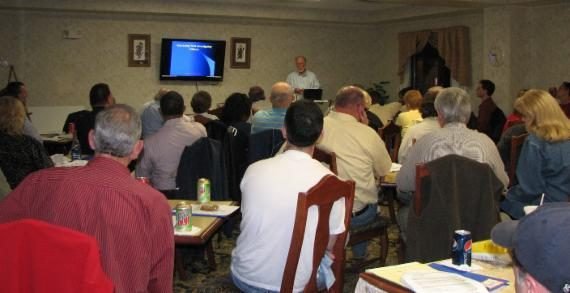
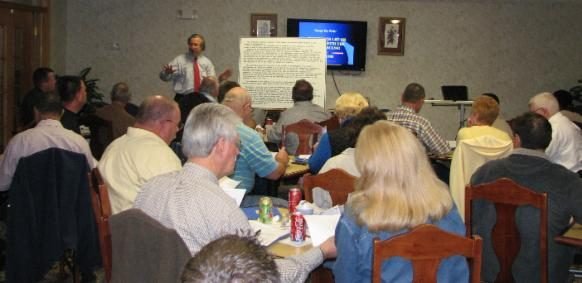
Concealed Handgun Carry was the first to offer the After Deadly Force Seminar to citizens with a concealed handgun permit. Since our first ADF class in August of 2007 we have worked diligently to improve this class. The course is presented in PowerPoint, and we have the services of a highly competent self-defense attorney to assist in the presentation. We are constantly updating our material to ensure you get the latest information.
Seminar details
- Length: 4 hours (typically an evening session)
- Cost: $100.00 (please confirm when registering)
- Location: Wilson, NC area — venue provided at registration
- Who may attend: participants must be properly vetted. A concealed handgun permit, law enforcement or active military status will usually qualify a person for attendance. If none of the above applies to you and you would like to attend, please contact me for vetting. Due to the course content, we will not present this class without restrictions to the general public.
Proper training is the answer to a lot of pitfalls in our judicial system. There is not another class in NC that will prepare you for a use of deadly force incident as well as this class will. Don’t allow yourself to fall through the cracks in the system — I have seen many people get convicted because they did something that this training could have prevented. There will be much presented that even law enforcement officers are not aware of, except for the handful who work in specialized units.
Our efforts are ongoing to bring training to the area for holders of the NC Concealed Handgun Permit. They are truly among the absolute best citizens of our state. The facilities we use are accessible to students with limited mobility, including wheelchairs.
Register / contact us · 252-937-8198 · chris@concealedhandguncarry.com