
Homeland security begins at home. Concealed Handgun Carry, Inc. has taught the North Carolina concealed carry class — the state-approved Concealed Handgun Carry course you need for an NC concealed handgun permit — since January 2006 from Elm City, NC, near Wilson and Rocky Mount and about 45 miles east of Raleigh. Every class is taught by Chris Raper, a retired lawman with more than 40 years in law enforcement, with his wife Dianne Raper as assistant instructor.
This page is our complete concealed carry hub: everything about the class (curriculum, shooting test, what to bring, cost), how to get your permit afterward, the North Carolina concealed carry laws that trip people up, holster and carry advice, and the training that should come next. Read it top to bottom or jump to what you need.
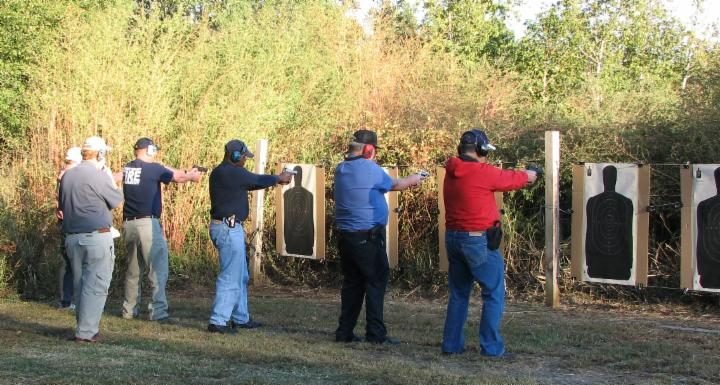
Concealed carry in North Carolina at a glance (October 2026)
Short answer: To carry a concealed handgun in North Carolina off your own property, you need a concealed handgun permit from the sheriff of your county. To apply, you must be 21 or older, a U.S. citizen or lawful permanent resident, a North Carolina resident for at least 30 days, and a graduate of an approved concealed carry class like ours. The permit costs $80 plus up to $10 for fingerprints, the sheriff has 45 days to decide, and it is good for five years.
Permitless carry? Not in North Carolina, as of October 2026. Senate Bill 50 was vetoed in June 2025. The Senate voted to override; the House has not held an override vote, so a permit is still required.
| Step | What you do | Cost / time |
|---|---|---|
| 1 | Take an approved NC concealed carry class (minimum 8 hours, classroom + live fire) | Our tuition: $100 · one day |
| 2 | Apply to the sheriff of your county of residence with your original certificate | $80 permit fee |
| 3 | Fingerprints and mental health records release | Up to $10 |
| 4 | Sheriff runs background checks and issues or denies | Up to 45 days |
| 5 | Carry legally statewide, renew every five years | $75 renewal |
Our full statute-by-statute guide is North Carolina concealed carry laws: the complete guide, and the step-by-step application walkthrough is how to get your NC concealed handgun permit.
The North Carolina Concealed Handgun Carry Class
The North Carolina Concealed Handgun Carry Class is the state-required course for your NC concealed handgun permit. The state sets the minimum — at least eight hours, two of them on legal issues, with a written exam and live-fire range work — and certified instructors may teach more. Our class runs about nine hours because the law of deadly force deserves the time. It is approved, taught in person, and you leave with the certificate the sheriff requires.
I understand that there are less expensive classes available. There are many, many instructors presenting this course to the public. If price is your major consideration, you will find classes taught by instructors with far less experience than ours. If quality is your major consideration, compare qualifications first — the questions students ask about the use of deadly force cannot be answered correctly without a real legal and law enforcement background. — Chris Raper
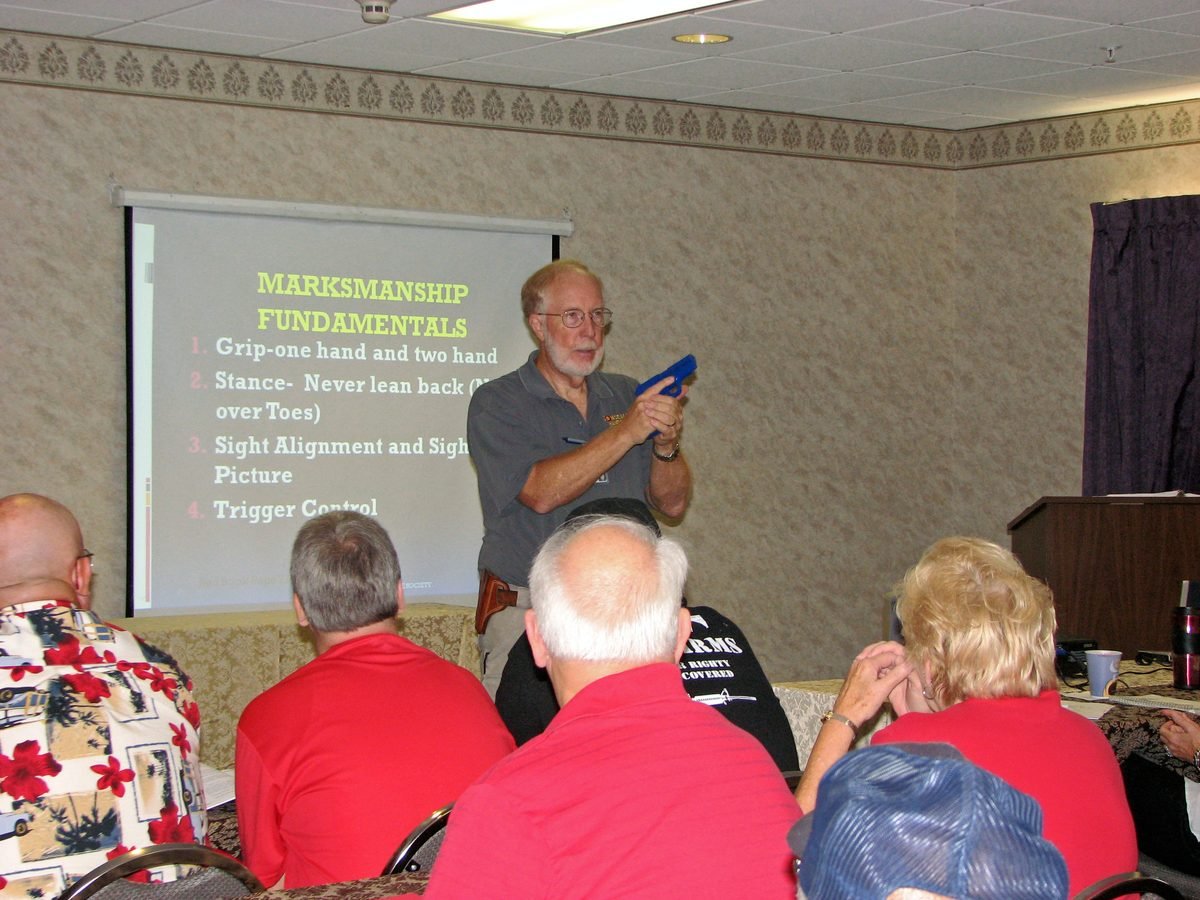
What the class covers
| Module | What you learn | Required by NC rule? |
|---|---|---|
| Legal issues | Use of deadly force and self-defense, where concealed carry is prohibited, safe storage and minors (G.S. 14-315.1), the duties of a permit holder, written legal exam | Yes — 2 hours minimum |
| Handgun safety | Safe handling rules, safe storage at home and in the car, carry safety, storage when children live in the home | Yes |
| Handguns (nomenclature) | Parts and operation of revolvers and semi-automatic pistols | Yes |
| Handgun fundamentals | Loading, unloading and operating both types safely | Yes |
| Marksmanship fundamentals | Grip, stance, sight alignment and sight picture, trigger control and dry fire | Yes |
| Carrying concealed | Holster selection, carry positions and the safety issues of carrying every day | Our addition |
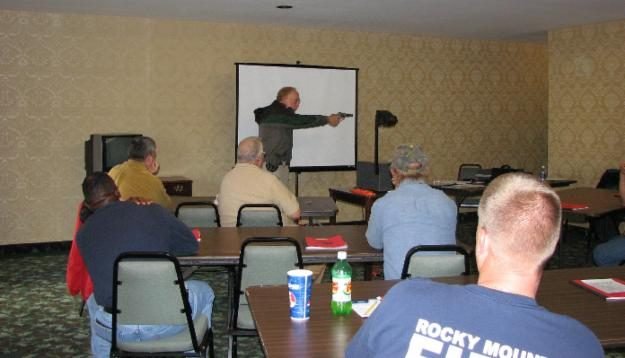
| Presentation techniques | Drawing your handgun from the holster safely and efficiently | Yes |
| Cleaning and maintenance | Field stripping, function checks and lubrication | Yes |
| Ammunition | The components of a cartridge and choosing defensive ammunition | Yes |
| Range qualification | 30 rounds from 3, 5 and 7 yards; 21 hits required | Yes |
The classroom is presented with PowerPoint, animated graphics and real case examples from Chris’s law enforcement career. You will take a safety test and a legal exam before the range. Dianne Raper handles student check-in and the safety test.
The shooting qualification
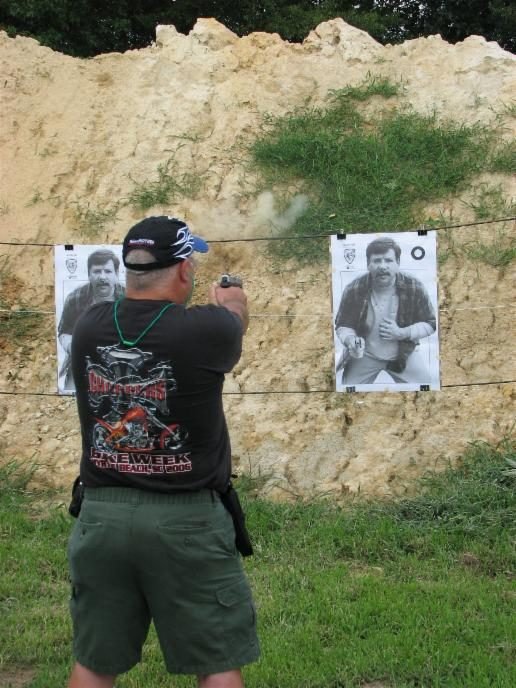
Many students worry about the shooting part. Don’t. Our target is the standard B-27 — the same silhouette most law enforcement agencies use, about the size of an average person from the waist up. You must hit it with 21 of 30 rounds fired from the 3, 5 and 7 yard lines. The state designed this course for the average person, and shooters with very little or no experience do very well with our instruction.
Our pass guarantee: We will return 100 percent of your money if you fail the range qualification, or we will work with you until you pass. If your handgun malfunctions or does not suit you, we provide a handgun and ammunition so you can complete the course of fire. The only time we cancel or delay a class is when it is unsafe to shoot, such as lightning or ice.
What to bring to class
- A good-quality handgun and 50 rounds of ammunition (no handgun? call us about a loaner)
- Eye protection and hearing protection
- A holster and a belt that fits it — no cross-draw or shoulder holsters, for safety
- A hat or cap with a brim, to keep hot brass away from your eyes
- Loose clothing with pockets, or a jacket with pockets for magazines and ammunition
- Closed-toe shoes — no sandals or open-toe shoes
- Your driver’s license or state ID
Leave firearms and ammunition in your vehicle until the instructor asks for them. Know how to load and unload your handgun safely before class — read the manual and practice at home with the gun unloaded. Single-action “cowboy” revolvers are not allowed; they are too slow to load and reload and are not adequate for defensive use in the hands of most people. New to holsters? Start with our instructor’s guide to choosing a concealed carry holster.
Schedule, cost and registration
| Details | |
|---|---|
| Schedule | On request — we set a date for your private group of five or more. Email us to join the notification list for the next open class. |
| Hours | About 9 hours, 8:00 AM to 5:00 PM |
| Location | Private range near Wilson, NC (Elm City, Wilson County); directions sent when you register. We can also travel to your group. |
| Tuition | $100 per student as last published — please confirm current pricing when you register |
| Payment | US Postal money order, cash, or personal/business check payable to Chris Raper, due before class |
| Accessibility | Facilities accessible to students with limited mobility, including wheelchairs |
| Register | Call Chris or Dianne at 252-937-8198 (cell 252-908-3013) or email chris@concealedhandguncarry.com |
After class: how to get your NC concealed carry permit
Your certificate from our class is the first document the sheriff asks for. Here is the rest of the process under N.C.G.S. 14-415.13:
- Bring your original course certificate to the sheriff of your county of residence (most eastern NC sheriffs, including Wilson, Nash, Edgecombe, Pitt and Wake, start the application online first).
- Complete the permit application under oath.
- Pay the non-refundable $80 permit fee and the fingerprint fee of up to $10.
- Give a full set of fingerprints and sign the release for mental health records.
- Wait for the decision — the sheriff has up to 45 days (G.S. 14-415.15).
- Carry your permit and ID every time you carry, and tell an officer you are a permit holder and armed when approached in an official capacity (G.S. 14-415.11).
- Renew within the 90 days before your permit expires ($75), and report a permanent address change within 30 days.
Retired law enforcement officers, LEOSA holders and anyone with an emergency situation have special provisions — see getting your North Carolina concealed handgun permit and NC concealed handgun permit renewal. Buying a handgun? The sheriff’s pistol purchase permit was repealed in 2023 — here is what the repeal changed and what it did not.
Training after the permit class
The permit class is the legal minimum. Real confidence comes from practice under a good instructor. Students who complete all of our classes earn our Warrior Award. Prices below are as last published; confirm when you call.
Defensive Shooting Class
About 6 hours · $125 · max 10 students
Shooting on the move, from retention, one-handed and under stress. For permit holders.
Handgun Skills Clinic
3 hours · $75 · max 8 students
Three hours of pure pistol marksmanship — the fastest way to tighten your groups.
After Deadly Force Seminar
4 hours · $100
What happens, and what to say and do, after you use deadly force. Presented with a criminal defense attorney.
G-A-L-S Class (women only)
Private · $40 per hour
Beginner handgun instruction for women, taught with Dianne Raper.
AR-15 Carbine Class
Day and night fire · call for fee
Carbine handling, positions and drills for AR-15 owners.
Shotgun for Home Defense
About 6 hours · $100
The recoil-management method Chris learned from Rob Haught, for home-defense shotgun owners.
Choosing your carry gun
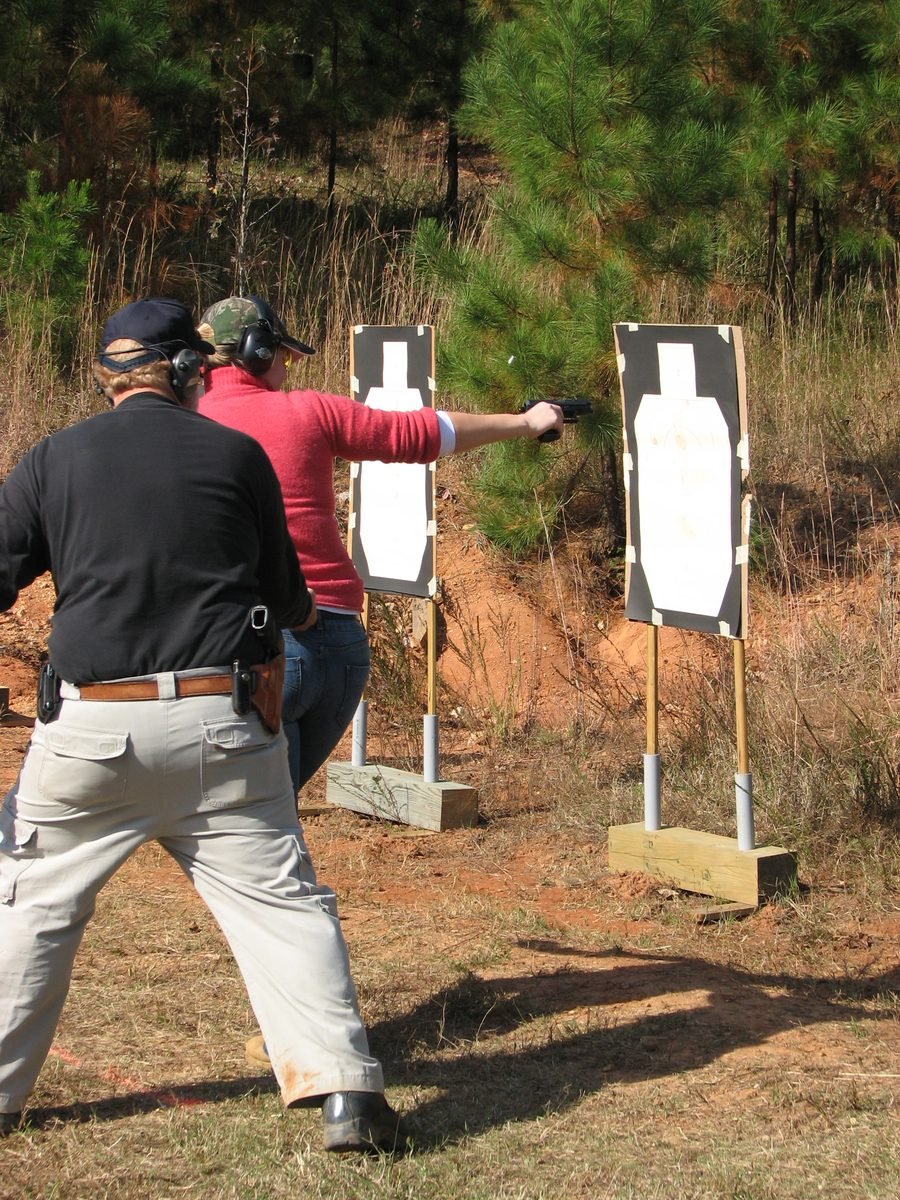
The most common problem we see on the range is not the shooter — it is a handgun that does not fit the shooter. Pick a double-action revolver or a striker-fired or double-action semi-automatic that fits your hand, that you can rack and reload reliably, and that you can shoot accurately at 7 yards. For most people that means a compact or subcompact 9mm; a smaller .380 or a revolver can make sense for small hands or pocket carry. Rent or borrow before you buy, and bring the gun you actually plan to carry to class.
For side-by-side picks, specs and sizes, see our sister site’s guide to the best concealed carry gun and its list of carry guns for first-time permit holders.
Holsters and carrying every day
A permit lets you carry; a good holster and belt let you carry safely all day. A holster must cover the trigger guard completely, hold the gun securely and stay put when you draw. Our free guides, written from the same instruction we give in class:
- Concealed carry holster guide — positions, materials, retention and fit in one place
- How to choose a concealed carry holster — an instructor’s checklist
- IWB vs OWB holsters — inside or outside the waistband
- Appendix carry guide — how AIWB works and how to do it safely
- Concealed carry positions: the clock guide — 12 to 6 o’clock
- Kydex vs leather vs hybrid holsters
- Holster retention levels explained
- Holster safety rules every concealed carrier should follow
- Concealed carry holsters for women — what actually works
- Gun belt guide — why the belt matters as much as the holster
- How to stop printing and holster fit and sizing
- Drawing from concealment: practice drills for after the class
North Carolina concealed carry laws you must know
The legal block of our class is where most students learn the most. These are the rules that cause real trouble for permit holders, each with a full guide:
| Topic | The rule in one line | Full guide |
|---|---|---|
| Duty to inform | Carry your permit and ID, and disclose the permit and handgun when an officer approaches or addresses you (G.S. 14-415.11). | Carrying in your car |
| Prohibited places | Schools, courthouses, state buildings, law enforcement facilities, parades, posted premises and more. | Where you cannot carry |
| Alcohol | You may carry in a restaurant that serves alcohol unless posted, but never while consuming or with alcohol in your body. | NC concealed carry FAQ |
| Use of deadly force | Castle Doctrine (G.S. 14-51.2–14-51.4) covers home, vehicle and workplace — it is not a license to shoot. | Castle Doctrine explained |
| Reciprocity | NC honors every state’s permit; roughly three dozen states honor ours. Check before every trip. | NC reciprocity |
| Open vs concealed | Open carry is generally legal without a permit; concealed carry off your premises requires one. | Open vs concealed carry |
| Renewal | Every five years, within 90 days before expiration, $75. | Permit renewal |
More: all concealed carry resources · concealed carry glossary (45 terms) · firearm safety · suggested reading · all guides and articles
Concealed carry class near you
Looking for a concealed carry class near me in eastern North Carolina? Students drive to Elm City from across the region, and we will bring the course to your group of five or more:
| From | Drive to Elm City | Details |
|---|---|---|
| Wilson | About 15 minutes | Concealed carry class near Wilson, NC |
| Rocky Mount | About 20 minutes | Concealed carry class near Rocky Mount, NC |
| Greenville | About 45 minutes | Concealed carry class near Greenville, NC |
| Raleigh | About 45 miles east | Concealed carry class near Raleigh, NC |
We come to you. All our equipment is portable, so we can teach at your hunting lodge, club or other remote facility. No electricity? No problem — we bring a generator for the computer and projector. You provide a safe place to shoot.
Your instructor: Chris Raper
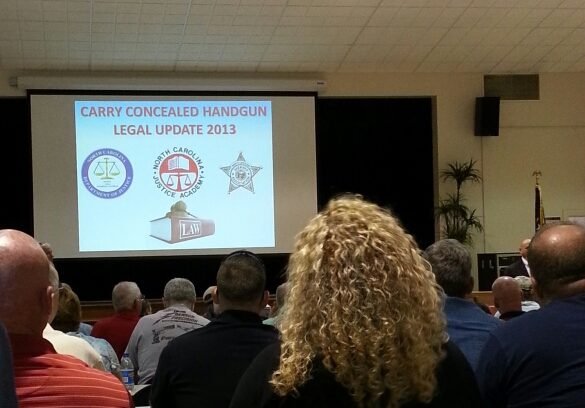
M. C. (Chris) Raper founded Concealed Handgun Carry, Inc. in January 2006 and has presented the North Carolina Concealed Handgun Carry Class ever since. In North Carolina, an instructor needs only an NRA Basic Pistol Instructor certification and a short Department of Justice class — no law enforcement experience is required. Chris brings four decades of it:
- More than 40 years in law enforcement
- Four years as a Security Police Officer (K-9), U.S. Air Force, with Vietnam service in 1966–1967
- Certified by the North Carolina Department of Justice as a Firearms Safety Instructor
- NRA instructor for the Basic Pistol, Rifle and Basic Shotgun courses; certified NRA Range Safety Officer
- Graduate of Massad Ayoob’s Lethal Force Institute (judicious use of deadly force and StressFire)
- Trained under Larry Vickers (Vickers Tactical), Bruce Gray (Gray Guns), Scott Warren (Warren Tactical), Randy Harris (Suarez International) and Rob Haught (shotgun)
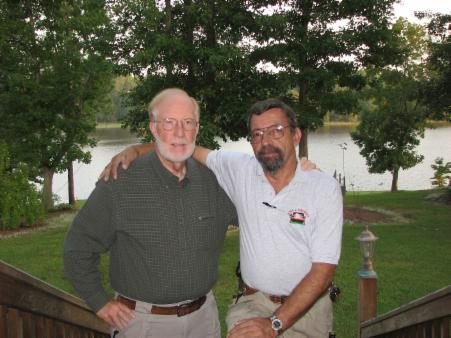
Dianne Raper, assistant instructor, is a retired educator who taught in the North Carolina public schools for 34 years. She is an avid shooter, a graduate of the Lethal Force Institute, and co-teaches the women-only G-A-L-S class.
My promise to my students: If any of my students are ever involved in a court action as a result of their use of deadly force, I will assist your attorney with your defense without charge other than personal expenses. Have your attorney contact me at 252-937-8198. If your instructor cannot make you that promise, maybe you should find one who will. — Chris Raper
Read Chris’s full instructor qualifications, including the world-class instructors he has trained under.
What students say
These comments come from emails students sent us after their classes. Read the complete messages on our student feedback page.
“The classes were everything I was expecting from Chris Raper… Safety is the top priority to Chris for the well being of the students regardless of their experience or lack of.”
— Mike B., 25th recipient of the Warrior Award“Thank you for dispelling a large amount of misinformation I have received in the past and providing an accurate, intelligent course of instruction.”
— R. Strufe, retired after 35 years in the pharmaceutical industry“In my 20 years of law enforcement I never received such thorough “real life” training in one day.”
— Joe C., retired law enforcement officer, November 2010“Since Marge took your GALS class and CHC class, she has applied for her permit… It took me 30+ years to get her interested in shooting, but less than 2 hours for you to give her the “bug”.”
— B. Ransom“I really enjoyed both your concealed carry class in December as well as your defensive shooting class in January… Thanks to you and Dianne, I feel I now have the confidence and tools to work with.”
— S. Bruton“Whether the students are beginners or have been shooting for years, you will learn to do things you didn’t know you were capable of.”
— D. BrownFrequently asked questions about the NC concealed carry class
How long is the NC concealed carry class?
North Carolina requires a course of at least eight hours, including two hours on the law and a written exam (12 NCAC 09F .0102). Our class runs about nine hours, from 8:00 AM to 5:00 PM, with the classroom portion in the morning and the live-fire qualification on the range.
How much does the concealed carry class cost?
Tuition for our North Carolina Concealed Handgun Carry Class is $100 as last published; please confirm the current price when you call to register. Separately, your county sheriff charges the state permit fee of $80 plus up to $10 for fingerprints, so many eastern NC counties collect $90 for a new permit.
What is the shooting test in the NC concealed carry class?
You fire 30 rounds at a standard B-27 silhouette target from the 3, 5 and 7 yard lines and must put at least 21 hits on the target. That is the North Carolina standard, and it is well within reach of a first-time shooter with the right handgun and good instruction.
What happens if I fail the shooting qualification?
We work with you until you pass, or we refund 100 percent of your tuition. If your own handgun malfunctions or simply does not fit you, we will provide a handgun and ammunition so you can finish the course of fire.
Do I need to own a handgun to take the class?
No. You need a handgun for the range portion, but if you do not have one, call us before class and we will arrange a loaner. Bring 50 rounds of ammunition for your own gun. Single-action “cowboy” revolvers are not allowed.
Can I take the North Carolina concealed carry class online?
No. North Carolina requires an approved course that involves the actual firing of handguns and classroom instruction on the law, so an online-only course does not qualify you for an NC permit. Our course is taught in person, in a classroom and on a range.
Do I still need a permit to carry concealed in North Carolina in 2026?
Yes. As of our last review in October 2026, you need a concealed handgun permit to carry a concealed handgun off your own premises in North Carolina. Senate Bill 50 (permitless carry) was vetoed in June 2025; the Senate voted to override, but the House has not held an override vote, so the bill is not law. We will update this page if that changes.
How do I apply for my permit after the class?
Take your original course certificate to the sheriff of the county where you live, complete the application under oath, pay the $80 fee plus the fingerprint fee, give a full set of fingerprints and sign the mental health records release. Many eastern NC sheriffs start the application online first.
How long does it take to get an NC concealed carry permit?
Once the sheriff has your complete application, G.S. 14-415.15 gives the office 45 days to issue or deny the permit. Some counties are faster; appointment wait times vary.
How old do you have to be to get a concealed carry permit in North Carolina?
You must be at least 21, a U.S. citizen or lawful permanent resident, and a North Carolina resident for at least 30 days, and you must not be disqualified under G.S. 14-415.12(b).
How long is an NC concealed handgun permit good for?
Five years. You can renew within the 90 days before it expires for a $75 fee, and the sheriff may waive the training course for a timely renewal. You must report a permanent address change to the sheriff within 30 days.
Where are your classes held?
In Elm City, NC (Wilson County), at a private range near Wilson, about 15 minutes from Wilson, 20 minutes from Rocky Mount and roughly 45 miles east of Raleigh. You receive exact directions when you register. The facilities are accessible to students with limited mobility, including wheelchairs.
Do you teach private groups or travel to us?
Yes. Classes are scheduled on request for private groups of five or more. We can teach at our range near Wilson or bring the same course to your location; our equipment is portable and we bring a generator if there is no power. You need to provide a safe place to shoot.
Do you offer a women-only handgun class?
Yes. The G-A-L-S class is private beginner instruction for women, taught with assistant instructor Dianne Raper, a retired educator and graduate of Massad Ayoob’s Lethal Force Institute.
Is the permit class enough training to carry a gun?
It is the legal minimum, not a complete education. We recommend the Handgun Skills Clinic for marksmanship, the Defensive Shooting Class for drawing, moving and shooting under stress, and the After Deadly Force Seminar for what happens legally after a defensive shooting.
Have a question we did not answer? See all 25 questions students ask us or call 252-937-8198.
Ready to take the NC concealed carry class?
Call Chris or Dianne and we will set a date for your group, or get on the list for the next open class.
Concealed Handgun Carry, Inc. · Elm City, NC 27822 (Wilson County) · Phone 252-937-8198 · Cell 252-908-3013 · chris@concealedhandguncarry.com
Si vis pacem, para bellum. The information on this page about North Carolina law is general information, not legal advice, and was last reviewed in October 2026. Statutes change — confirm current requirements with your county sheriff and the NC Department of Justice, and consult a North Carolina attorney about your situation.