Open Carry vs. Concealed Carry in North Carolina: Law and Reality
North Carolina treats open carry and concealed carry very differently. Openly carrying a handgun requires no permit; the state has never had a statute against it, and the only limits are the prohibited-place laws that apply to everyone and a few local rules on public property. Carrying the same handgun concealed, by contrast, requires a concealed handgun permit under G.S. 14-269 and Article 54B of Chapter 14, with training, a background check and a set of ongoing obligations. After 20 years of teaching the permit class, our recommendation is firm: train, get the permit, and carry concealed. Here is why.
Laws change — this page was last reviewed October 2026 and is general information, not legal advice. This article is part of our guide to North Carolina concealed carry laws.
The legal line between open and concealed
G.S. 14-269(a1) makes it unlawful to carry a pistol concealed about your person off your own premises without a permit. The statute does not define concealed, but North Carolina courts have long applied a plain meaning: hidden from the ordinary observation of people around you. A pistol in an outside-the-waistband holster with nothing over it is open. The same pistol with a shirt tail or a jacket hanging over it is concealed. A handgun in an unlocked console within reach is concealed. The line is about visibility, not intent, and it is easy to cross accidentally: sit down in a booth, let your jacket swing shut, and an openly carried pistol has become a concealed one. For a non-permit holder that is a Class 2 misdemeanor, and a Class H felony on a second offense.
Open carry has no permit and no training requirement. You must simply be a person who may lawfully possess the handgun under state and federal law. The concealed handgun permit, on the other hand, requires that you be 21, a resident for 30 days, complete an approved course and clear the background check in G.S. 14-415.12. Those requirements are the state’s price for the privacy of concealment, and the permit comes with the obligations in 14-415.11: carry the permit and ID, disclose to officers, and avoid carrying with any alcohol in your body.
Side-by-side comparison
| Question | Open carry | Concealed carry |
|---|---|---|
| Permit required? | No | Yes, G.S. 14-269(a1), Article 54B |
| Training required? | No | Yes, approved course under 14-415.12(a)(4) |
| Minimum age | No specific state carry age; federal and state possession rules for minors apply | 21 |
| Duty to inform officers? | No statutory duty | Yes, 14-415.11(a) |
| Alcohol rule | Cannot enter establishments serving alcohol unless an exception applies (14-269.3) | May enter unless posted; no drinking or alcohol in body (14-415.11(c2)) |
| Schools, courthouses, state and federal buildings | Prohibited | Prohibited, with locked-vehicle exceptions for permit holders |
| Posted private property | Owner may refuse entry; trespass if you stay | Infraction under 14-415.21(a) plus trespass |
| In a vehicle | Must be genuinely in plain view | May be concealed on person or in vehicle |
| Honored in other states? | Depends entirely on that state’s law | Permit recognized by roughly three dozen states |
Where open carry is restricted
Open carry does not exempt you from any of the place-based statutes. G.S. 14-269.2 prohibits all firearms on educational property. G.S. 14-269.4 prohibits any deadly weapon, openly or concealed, in courthouses and the State Capitol complex. G.S. 14-269.3 prohibits firearms in establishments where alcohol is sold and consumed and at admission-charging events, and the exception in that statute is for permit holders, so an open carrier without a permit cannot walk into a restaurant that serves beer. G.S. 14-277.2 bars dangerous weapons at parades and demonstrations. Federal facilities are closed to everyone.
Local governments add one more layer. The state preempts most local firearm regulation under G.S. 14-409.40, but subsection (f) preserves the authority of cities and counties under G.S. 160A-189 and 153A-129 to regulate the display of firearms on streets, sidewalks and other public property, and to prohibit firearms in their own buildings, parks and recreation areas under 14-415.23. Several North Carolina cities have ordinances on display in public places. That means open carry can be lawful on one side of a city limit sign and an ordinance violation on the other. A permit holder carrying concealed does not have that problem.
Finally, North Carolina still recognizes the common-law offense of going armed to the terror of the public. Openly carrying a firearm by itself is not that offense; carrying it in a way that alarms people, with an unusual or dangerous weapon, for the purpose of terrifying, can be. The point is that open carry puts your conduct under a magnifying glass that concealed carry does not.
Practical pros and cons of open carry
What open carry offers
- No permit, no fee, no class, no five-year renewal cycle.
- Faster access to the handgun, with no cover garment to clear.
- Comfort in hot weather, and with larger handguns that are hard to conceal.
- Possible deterrence; a visible handgun may send some trouble elsewhere.
What it costs you
- You lose the element of surprise. In our experience and in the law enforcement careers of the instructors we work with, the person who starts a violent encounter picks the target and the moment. An open carrier is identified as armed before the fight begins, and becomes either the first person dealt with or the person whose gun gets taken.
- Retention becomes a constant job. A visible handgun in a crowd, in a checkout line or at a gas pump is a grab waiting to happen. Open carry responsibly requires a retention holster and the training to use it; see our explainer on holster retention levels.
- Everyone reacts. Expect 911 calls, store managers asking you to leave, and officer contacts that start tense. None of that is illegal, but it is your afternoon.
- One jacket away from a crime. Without a permit, accidental concealment is a misdemeanor. With a permit, it is nothing.
- The car problem. Open carry in a vehicle requires the handgun to be genuinely visible, which advertises it to every passerby in a parking lot. Our guide to carrying in your car covers the rules for both.
Practical pros and cons of concealed carry
Concealed carry asks more of you up front: a day of training, about $90 to the sheriff, a holster and belt that actually work, and a wardrobe that accommodates the gun. In return you get discretion, which is the single most valuable tactical asset a private citizen has; a permit that is honored in most of the country; the ability to enter restaurants that serve alcohol; locked-vehicle exceptions in school and courthouse lots; and the benefit of having sat through eight hours on the law of deadly force before you ever needed it. The downsides are real but manageable: a slightly slower draw, the need to manage printing and cover garments, and the duty to disclose to officers.
What we tell students
We are not opposed to open carry, and there are places and tasks where it makes sense: on your own land, hunting, working a rural property, or for someone who physically cannot conceal a handgun. For everyday life in Wilson, Rocky Mount or Raleigh, though, our advice has not changed since 2006. Get the training, get the permit, carry concealed, and carry every day. The permit does not stop you from carrying openly when you choose to; it simply means that if your shirt falls over the gun, nothing has happened. And the training is the part that matters most. In our classes we see people who have openly carried for years and have never been taught what G.S. 14-51.3 actually requires before deadly force is justified, which is a dangerous gap. Our Castle Doctrine and stand-your-ground explainer is a start, but there is no substitute for the classroom and the range.
A note on the pending permitless-carry bill
Senate Bill 50, “Freedom to Carry NC,” would allow adults 18 and older who may lawfully possess a handgun to carry concealed without a permit. It passed both chambers in 2025, was vetoed by Governor Stein on June 20, 2025, and the Senate voted to override on July 29, 2025. As of our October 2026 review the House had not taken the override vote, so the bill is not law and a permit is still required to carry concealed in North Carolina. Even if that changes, the bill keeps the permit system in place, and the permit would remain the only way to carry in other states and the only route to the training most people never otherwise get. Check the current statute before relying on anything you read about permitless carry.
Bottom line
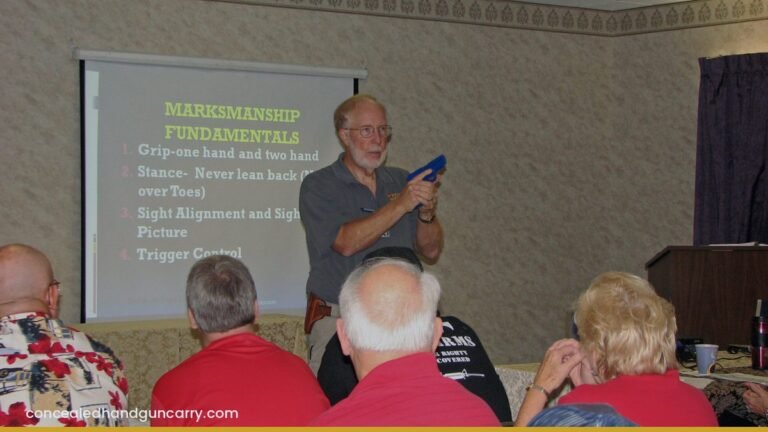
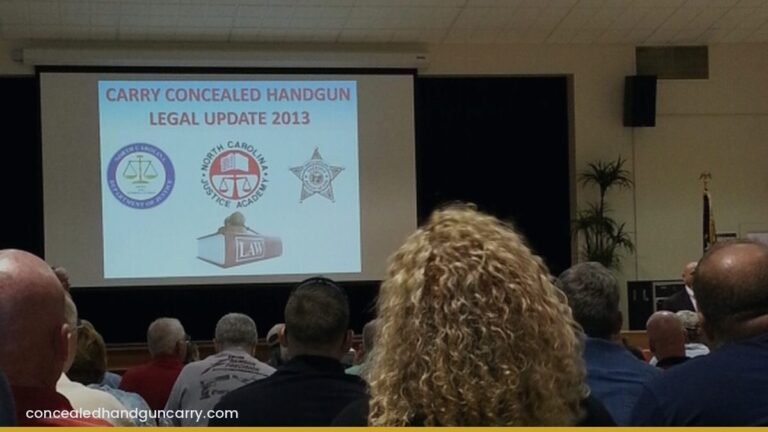
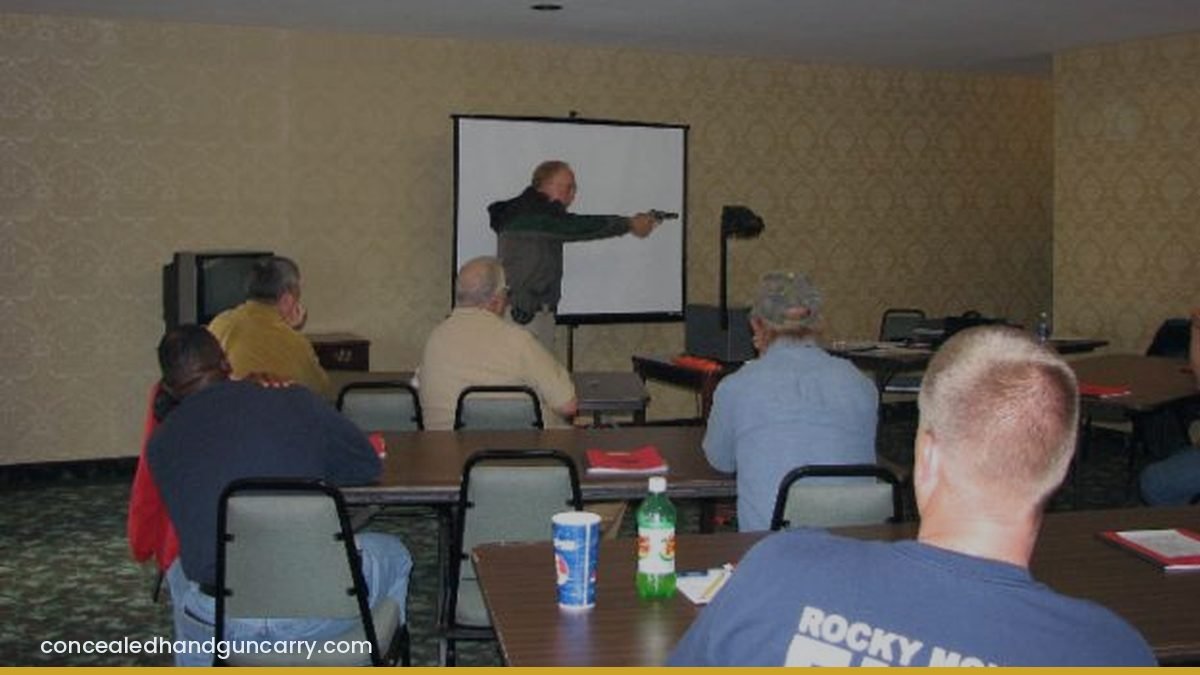
Open carry is legal in North Carolina without a permit, but it is the harder way to carry well. Concealed carry costs you one day of training and a sheriff’s fee and gives you discretion, broader access and the knowledge to use a handgun lawfully. If you are deciding between the two, let us make the case in person: the NC Concealed Handgun Carry class meets regularly in Elm City, and you can register for the next date here.
Frequently asked questions
Is open carry legal in North Carolina?
Yes. North Carolina has no statute prohibiting the open carry of a handgun by a person who may lawfully possess one, and no permit is required. Prohibited places such as schools, courthouses and posted property still apply, and cities may regulate display on some public property under G.S. 160A-189.
Do you need a permit to open carry in North Carolina?
No. The permit requirement in G.S. 14-269 and Article 54B applies to carrying a concealed handgun. Open carry requires only that you be a person who may lawfully possess the handgun under state and federal law, and the prohibited-place statutes still apply.
What counts as concealed in North Carolina?
A handgun is concealed when it is hidden from ordinary observation and about your person, including within convenient reach in a vehicle. A pistol partly covered by a shirt tail or jacket is concealed, not open.
Can I open carry at 18 in North Carolina?
State law has no separate minimum age for open carry; G.S. 14-269.7 bars minors under 18 from possessing handguns, and federal law bars dealer handgun sales under 21. You must be 21 to obtain a concealed handgun permit. Check current law and local ordinances before relying on this.
Does the duty to inform apply to open carry in North Carolina?
The duty in G.S. 14-415.11(a) applies to permit holders carrying a concealed handgun. Someone openly carrying without a permit has no statutory duty to announce the gun, though telling the officer is still the smart practice.
Which is better, open carry or concealed carry?
For daily life we recommend training, getting the permit and carrying concealed. Open carry is lawful but draws attention, invites confrontation, makes the firearm a target for theft, and offers no legal cover the moment the gun is accidentally covered.