North Carolina Castle Doctrine and Stand Your Ground, Explained
North Carolina’s Castle Doctrine, G.S. 14-51.2, presumes that a lawful occupant of a home, motor vehicle or workplace reasonably feared death or serious injury when using deadly force against someone unlawfully and forcibly breaking in, and it removes any duty to retreat. The companion stand-your-ground statute, G.S. 14-51.3, extends the no-retreat rule to any place you lawfully have a right to be, as long as you reasonably believe deadly force is necessary to prevent imminent death or great bodily harm. G.S. 14-51.4 then takes the protection away from anyone who provoked the fight or was committing a felony. Together, these three statutes are the whole of North Carolina’s written self-defense law, and they are shorter than most people assume.
Laws change — this page was last reviewed October 2026 and is general information, not legal advice. This is part of our North Carolina concealed carry law guide, and it is a summary of what we spend a full block of class time on.
The three statutes, side by side
| Statute | Common name | What it does |
|---|---|---|
| G.S. 14-51.2 | Castle Doctrine | Presumption of reasonable fear for a lawful occupant of a home, vehicle or workplace against an unlawful, forcible intruder; no duty to retreat; civil and criminal immunity. |
| G.S. 14-51.3 | Stand your ground | Defines when non-deadly and deadly force are justified in defense of a person; no duty to retreat in any place you lawfully have a right to be; immunity. |
| G.S. 14-51.4 | Limits | Justification unavailable to someone committing or fleeing a felony, or who provoked the use of force, with narrow exceptions. |
What the Castle Doctrine presumes
Under 14-51.2(b), the lawful occupant of a home, motor vehicle or workplace is presumed to have held a reasonable fear of imminent death or serious bodily harm when using force intended or likely to cause death or serious bodily harm, if two things are true. First, the person the force was used against was unlawfully and forcibly entering, had unlawfully and forcibly entered, or was attempting to remove another person against that person’s will from the home, vehicle or workplace. Second, the occupant knew or had reason to believe that an unlawful and forcible entry or act was occurring or had occurred. Subsection (d) adds a second presumption: a person who unlawfully and forcibly enters or attempts to enter is presumed to be doing so with the intent to commit an unlawful act involving force or violence.
Why does a presumption matter? In an ordinary self-defense case, the person who used force has to show the jury that the fear was reasonable. The Castle Doctrine flips that in the defined situations: the law assumes reasonable fear, and the State has to rebut it. Subsection (f) says there is no duty to retreat from an intruder in those circumstances. That is the heart of the doctrine.
Home, workplace and vehicle are defined broadly
Home means a building or conveyance of any kind with a roof, including its curtilage, designed to be occupied as a residence, temporary or permanent, mobile or immobile. The statute specifically says a tent counts. Workplace means a roofed building or conveyance, temporary or permanent, used for commercial purposes. Motor vehicle takes the definition in G.S. 20-4.01(23). A camper, a hotel room, a food truck, your pickup and your shop all fit.
When the presumption does not apply
Subsection (c) lists the situations where the presumption fails, and these are the ones that get people in trouble.
- The person had a right to be there. An owner, lessee or titleholder, or someone who lawfully resides in the home, is not an intruder, unless a domestic violence protective order or a written pretrial no-contact order is in effect against them. An estranged spouse who is still on the lease is a hard case, and the presumption does not help you.
- A parent or guardian retrieving a child. If the person being removed is the child or grandchild of the person using force, or otherwise in their lawful custody, there is no presumption.
- You were using the place to commit a crime. If the occupant is engaged in, attempting or escaping a criminal offense involving force or violence, the presumption is gone.
- Law enforcement. The presumption does not apply against a law enforcement officer or bail bondsman lawfully performing official duties who identified themselves as required, or whom you knew or reasonably should have known was acting in that role.
- The intruder left. Once the person has discontinued all efforts to enter and has exited, the presumption ends. Shooting someone running across the yard after a failed break-in is not Castle Doctrine territory.
Stand your ground: outside the castle
G.S. 14-51.3(a) covers defense of a person anywhere. You may use non-deadly force when and to the extent you reasonably believe it is necessary to defend yourself or another against imminent unlawful force. You may use deadly force, and you do not have a duty to retreat in any place you have the lawful right to be, in two situations: when you reasonably believe deadly force is necessary to prevent imminent death or great bodily harm to yourself or another, or when the circumstances fall under the Castle Doctrine in 14-51.2.
Three words in that section do most of the work. Reasonably means a jury will judge your belief against what a reasonable person would have believed in your position, not against what you felt. Imminent means about to happen, not threatened for next week. Lawful right to be means the no-retreat rule does not follow you into a place you were trespassing, and, as we stress in class, it raises an uncomfortable question for anyone carrying somewhere the permit does not cover; see where you cannot carry concealed in North Carolina.
Limits, and what immunity really means
What 14-51.4 takes away
The justification in both statutes is unavailable to a person who used defensive force while attempting, committing or escaping after committing a felony, or who initially provoked the use of force against himself or herself. The provoker gets two narrow doors back in: if the other person’s response was so serious that the provoker reasonably believed he was in imminent danger of death or serious bodily harm, had no reasonable means to retreat, and deadly force was the only way to escape; or if the provoker withdrew from physical contact in good faith, clearly indicated a desire to withdraw and stop, and the other person kept coming. The lesson for a permit holder is blunt. If you start the argument, escalate the road-rage incident, or go back outside to confront someone, you may have talked yourself out of the law’s protection before the first shot.
Immunity is decided afterward
Both 14-51.2(e) and 14-51.3(b) say a person who lawfully uses force is justified and is immune from civil or criminal liability, except where the force was used against an identified officer or bail bondsman acting lawfully. Immunity sounds absolute. In practice it is a legal conclusion reached by a prosecutor who declines to charge, or by a judge or jury, after an investigation. You will still be detained, your handgun will still be taken as evidence, and you may still be sued and have to assert the immunity in court. Lawful use of force is the beginning of a long process, not the end of one.
Scenarios we work through in class
Someone kicks in your front door at 2 a.m.
This is the case the statute was written for. Unlawful, forcible entry into your home while you are a lawful occupant; the presumption applies, there is no duty to retreat, and the intruder is presumed to intend violence.
Someone is breaking into your car in the driveway while you watch from the window
You are not an occupant of the vehicle, and nobody is forcibly entering your home. The Castle Doctrine presumption does not reach this, and 14-51.3 requires a reasonable belief that deadly force is needed to prevent imminent death or great bodily harm, which a car break-in does not supply by itself. Call 911, be a good witness.
A carjacker reaches through your window at a stoplight
You are the lawful occupant of a motor vehicle, and the person is unlawfully and forcibly attempting to enter or to remove you. The presumption applies. How you may lawfully have the handgun in the car in the first place is covered in our vehicle carry guide.
A fight you helped start in a parking lot turns deadly
14-51.4 applies. Unless you clearly withdrew and the other person pursued, or the response was wildly disproportionate and you had no way out, you may have lost the justification.
The duty to retreat, honestly
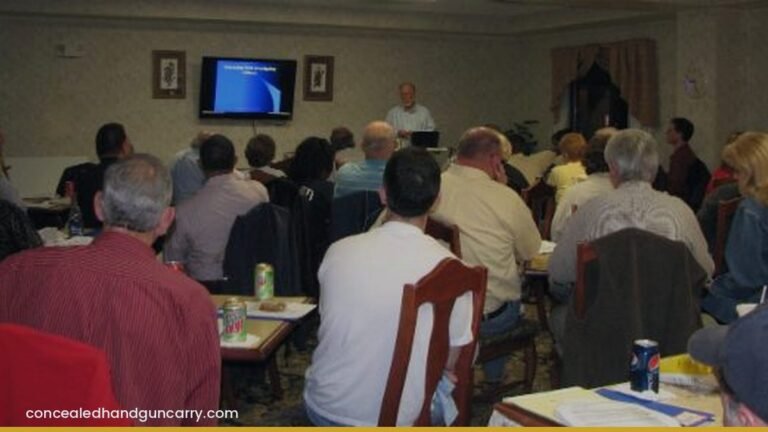
North Carolina has no legal duty to retreat in the situations these statutes cover. We still teach that avoiding a fight you can safely avoid is the best outcome every single time. The law tells you what you can be acquitted for; it does not tell you what is wise. Students who take our After Deadly Force seminar, built on what Chris learned at Massad Ayoob’s Lethal Force Institute and in four decades of law enforcement, come away understanding that the legal fight after a shooting is long, expensive and uncertain even when you were right.
Bottom line
North Carolina gives lawful occupants and lawful carriers strong protection, but it is bounded by reasonableness, imminence, lawful presence, and your own conduct before the confrontation. Knowing where those boundaries are is the difference between a justified defense and a felony charge. We cover these statutes in depth in the NC Concealed Handgun Carry class, and go further in the After Deadly Force seminar; dates for both are on the class schedule.
Frequently asked questions
Does North Carolina have a Castle Doctrine law?
Yes. G.S. 14-51.2 creates a presumption that a lawful occupant of a home, motor vehicle or workplace reasonably feared death or serious bodily harm when using deadly force against someone unlawfully and forcibly entering, and removes any duty to retreat.
Is North Carolina a stand-your-ground state?
Yes. G.S. 14-51.3(a) says a person who is in a place he or she has the lawful right to be has no duty to retreat before using deadly force, if the person reasonably believes it is necessary to prevent imminent death or great bodily harm.
Does the Castle Doctrine cover my car in North Carolina?
Yes. G.S. 14-51.2 expressly includes motor vehicles alongside homes and workplaces, and the presumption applies to someone unlawfully and forcibly entering or attempting to enter the vehicle or remove an occupant from it.
Can I shoot someone who is stealing from my yard or driveway in NC?
Not on that basis alone. The presumption in 14-51.2 applies to unlawful, forcible entry into the home, vehicle or workplace, and 14-51.3 requires a reasonable belief that deadly force is needed to prevent imminent death or great bodily harm. Property theft by itself does not meet that standard.
When does North Carolina's self-defense law not protect you?
Under G.S. 14-51.4, the justification is unavailable if you were committing or fleeing a felony, or if you provoked the confrontation, with narrow exceptions for withdrawing in good faith. The presumption also fails against a lawful resident, a parent retrieving a child, or an identified officer.
Does the Castle Doctrine give immunity from lawsuits in North Carolina?
G.S. 14-51.2(e) and 14-51.3(b) state that a person who lawfully uses force is immune from civil or criminal liability, except where force was used against a law enforcement officer or bail bondsman acting lawfully. Immunity is decided in court after the fact, not at the scene.