Appendix Carry Guide: How AIWB Works and How to Do It Safely
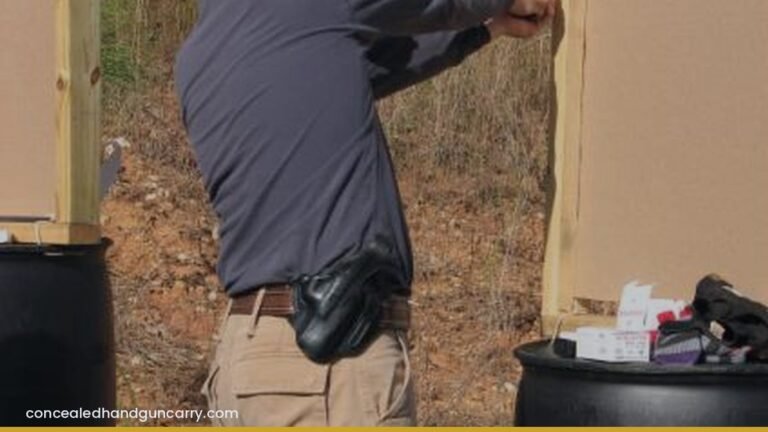
Appendix carry — AIWB, for appendix inside-the-waistband — means wearing the holster in front of your hip, between the belt buckle and the point of the hip bone, roughly 1 to 2 o’clock for a right-handed shooter. It is the fastest concealed draw most people can learn, it conceals well standing and seated, and it keeps the gun where you can protect it with both hands. It also points the muzzle at your femoral artery every time you holster, which is why we teach it carefully and do not recommend it as a first carry position.
This page is part of our holster series. The overview is how to choose a concealed carry holster and the full index is the concealed carry holster guide.
What appendix carry is
Traditional concealed carry puts the gun on the strong-side hip at 3 to 4 o’clock. Appendix moves it forward to the front of the body. The holster is always inside the waistband, usually with a single clip, often with a claw or wedge to control how the grip sits. Right-handed shooters wear it just right of the belt buckle; left-handed shooters just left of it. Some people wear it dead center at 12 o’clock, which works for very slim builds and is uncomfortable for everyone else.
The position has been around as long as people have stuck pistols in their waistbands. What changed in the last fifteen years is purpose-built holsters with rigid shells, adjustable ride height and devices that tuck the grip into the body, plus an instructor community that worked out how to teach it safely. Done right, it is a legitimate method. Done casually, it is the most dangerous place on your body to carry a gun.
Pros and cons
Why people choose it
- Speed. Your hands naturally rest in front of you. The grip is right there, the draw stroke is short, and the gun comes straight up into your line of sight.
- Concealment. The gun sits in the natural hollow below the stomach and above the thigh, where a shirt hangs straight. It does not print when you bend forward the way a hip holster does.
- Seated access. In a car with the seat belt on, a hip holster is pinned under the belt and the seat. An appendix holster is right in front of you.
- Weapon retention. You can see and defend the gun with both hands. Someone grabbing for it has to come at you from the front.
- Works for smaller frames. Many women and slimmer men who cannot hide a gun on the hip can hide one in front.
The costs
- Muzzle direction. Holstered, the muzzle points down your thigh, past the femoral artery and, depending on cant and build, near the groin. Seated, it can point directly into your leg. There is no version of appendix carry where this is not true.
- Comfort seated. The muzzle end of the holster presses into the thigh crease when you sit, especially with a longer barrel or a larger midsection.
- Less forgiving of mistakes. A hip holster that lets a shirt tail slip into the trigger guard during re-holstering sends a round into the floor beside you. The same mistake at appendix sends it into your leg.
- Gun size limits. Full-size pistols and long grips push into the stomach when you sit. Most appendix carriers end up with a compact or subcompact, and some with a shorter grip than they shoot best with.
Safety: the rules we do not bend
Muzzle discipline during the draw
The gun comes straight up out of the holster, muzzle down, and rotates toward the target only once the muzzle is clear of your body. Do not start turning the gun forward while it is still in the holster or in the first inch above it. Push your hips forward slightly as you draw so the muzzle clears the thigh.
Re-holstering is slow and seen
This is where appendix carry injures people. The rules: trigger finger straight along the frame, outside the trigger guard. Clear every bit of clothing out of the holster mouth with your support hand, then move that hand away. Lean back slightly from the hips so the muzzle points away from your leg rather than into it. Look the gun into the holster. Go slowly. Nobody has ever won a fight by re-holstering fast. If anything resists, stop, take the gun back out and find out why.
Trigger finger and the holster mouth
The holster must be rigid, must cover the entire trigger guard and must stay open when empty. Leather or soft hybrids that collapse are not appendix holsters, period. Check that the holster mouth is not deformed every time you take the holster off.
Claws and wedges
A claw is a small tab on the holster that presses against the belt and levers the grip into your body, reducing printing. A wedge is a piece of foam or molded material on the back of the holster, near the muzzle, that tilts the muzzle away from your body and the grip in. Both help concealment, but the wedge also has a safety function: it angles the muzzle outward, away from the femoral artery, when you are holstered and seated. We consider a wedge standard equipment for appendix carry.
These rules apply everywhere, not just appendix. We collected all of them in holster safety rules.
Body types and appendix carry
Appendix carry works best on people who have a defined hollow between the hip bone and the lower stomach. On a slim or athletic build, a compact pistol disappears there. On a person with a larger midsection, the stomach pushes the grip outward, the gun prints and sitting drives the muzzle into the thigh. That does not make it impossible — a shorter gun, a higher ride height and a wedge solve a lot — but it does make it harder, and some students are better served at 3:30 or 4 o’clock. Women often find appendix works well standing but conflicts with a high natural waist when seated; our page on concealed carry holsters for women goes into that.
The honest test is to carry an unloaded gun in the holster around the house for a day: sit in the car, sit on the couch, bend to tie your shoes. If you are shifting the holster every ten minutes you will not carry it, and a holster you do not carry is not protecting you.
How we teach it
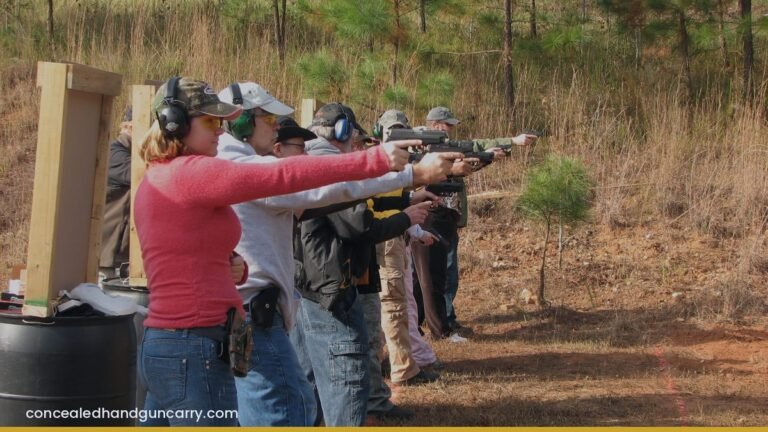
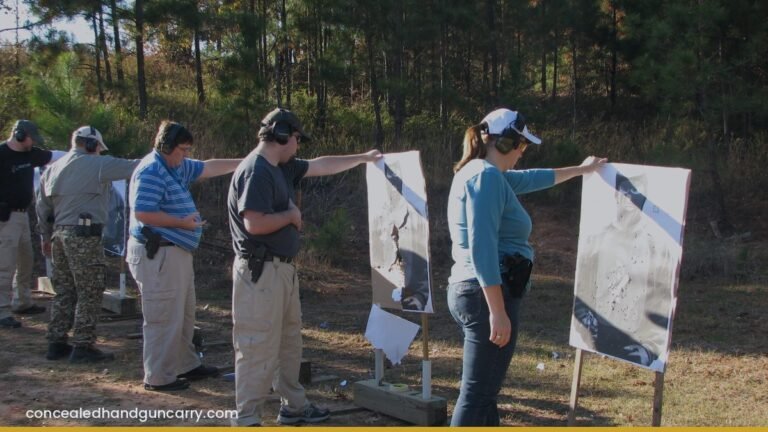
In our defensive shooting class, a student who wants to work from appendix has to show us the holster first. We check that it is rigid, covers the trigger guard and fits the exact gun. Then the sequence is:
- Dry, with a verified-unloaded gun, we walk through the draw in pieces: grip, clear the holster, rotate, extend. Twenty slow repetitions.
- Dry re-holstering, exaggerated: support hand clears the shirt, lean back, look it in. Twenty repetitions.
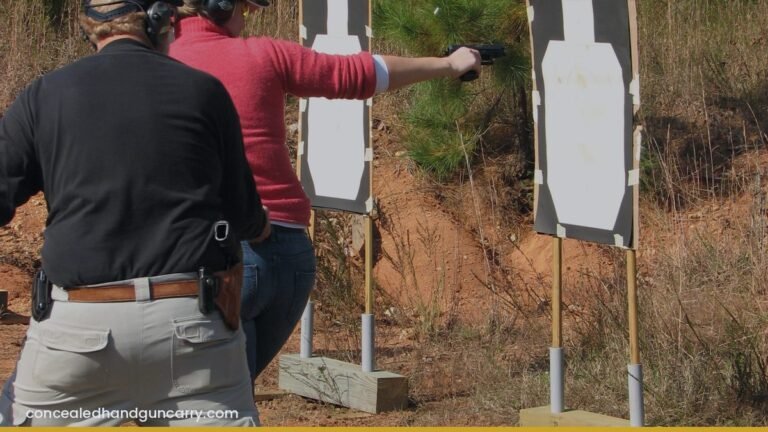
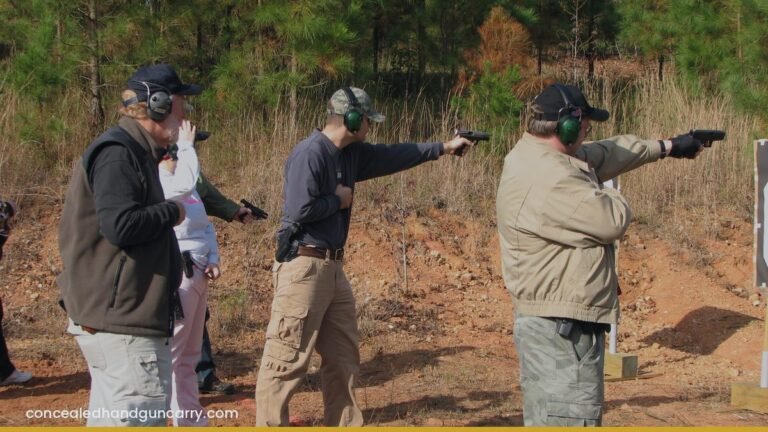
- Live fire from the holster only after the dry work is clean, starting at a pace that looks slow to everyone watching.
- Re-holstering on the line is always slow, always observed, always on command.
We do not let a student run a timer on an appendix draw until the draw is boringly consistent. Speed shows up on its own; it is not the thing being trained.
Who should not start with appendix carry
- A brand-new gun owner. Learn to draw and re-holster on the hip first, where a mistake costs less.
- Anyone who has not had an instructor watch them draw and re-holster. Video is not the same.
- Anyone carrying a gun with a light trigger they are not yet fully used to.
- Anyone carrying in a soft, collapsing or universal-fit holster.
- Anyone who cannot commit to looking the gun into the holster every single time.
None of those are permanent. They are reasons to start somewhere else — usually 3 to 4 o’clock, as laid out in the concealed carry positions clock guide — and move to appendix once the fundamentals are automatic.
Setting it up
Ride height should put the grip high enough for a full firing grip but low enough that the grip tucks under the shirt. Cant is usually neutral or slightly muzzle-forward. Add a wedge. Use a real gun belt; appendix carry depends more on belt tension than any other position. Make sure the holster is cut for your exact gun and any light or optic, because a loose fit at appendix is a safety problem rather than just an annoyance; see the holster fit and sizing guide. A gun that prints at appendix is usually fixed by a claw, a wedge or a half-inch of ride height before you consider a smaller gun.
Bottom line
Appendix carry is fast, concealable and defensible, and it demands more of you than any other position because the muzzle covers your own body. Rigid holster, wedge, slow re-holstering, eyes on the gun, every time. If you want to learn it the right way, register for our defensive shooting class, bring your holster, and we will build the draw with you from the first repetition.
Frequently asked questions
What is appendix carry?
Appendix carry, or AIWB, means wearing an inside-the-waistband holster in front of the hip, roughly 1 to 2 o'clock for a right-handed shooter. The gun sits between the belt buckle and the point of the hip bone.
Is appendix carry safe?
It is safe when done with a rigid holster that covers the trigger guard, a slow and deliberate re-holstering process, and training. The muzzle points toward the femoral artery when holstered, so mistakes cost more than they do on the hip.
What is a holster claw or wedge?
A claw presses against the belt to lever the grip into your body and reduce printing. A wedge sits behind the muzzle end and tilts the muzzle away from your body, which improves both concealment and safety.
Can heavier people carry appendix?
Often, but it is harder. A larger midsection pushes the grip outward and drives the muzzle into the thigh when seated. A shorter gun, higher ride height and a wedge help; some students are simply better served at 3:30 or 4 o'clock.
Should a beginner start with appendix carry?
We recommend starting at the strong-side hip, learning to draw and re-holster under instruction, and moving to appendix later if it suits you. It is a legitimate method, not a first method.
Is appendix carry comfortable sitting down?
It depends on the gun length, your build and the holster setup. A compact gun, a wedge and the right ride height make it workable for most people; a long barrel or a large midsection makes it uncomfortable in a car.