How to Choose a Concealed Carry Holster: An Instructor’s Guide
A good concealed carry holster does four things without exception: it covers the trigger guard completely, it holds the gun in place when you move, it keeps the gun in the same spot every time you reach for it, and it stays open so you can re-holster without pointing the muzzle at yourself. Everything else — position, material, retention level, price — is a trade-off you make around those four. This guide walks through each decision in the order we teach it.
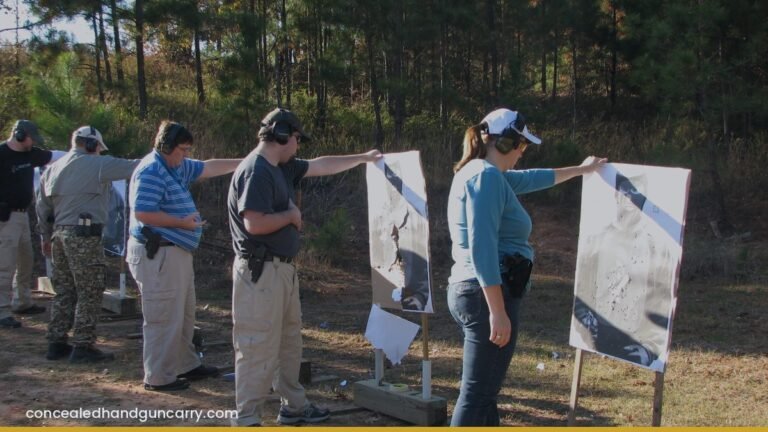
We have watched thousands of students draw from their own holsters on our range since 2006, and the holster is where most of the problems start. Use this article as the map and the concealed carry holster guide as the index of the detailed pages.
The four non-negotiables
Before you think about comfort or concealment, a holster must pass these four tests. Fail any one and it is not a carry holster, whatever the package says.
- Full trigger-guard coverage. Nothing — not a finger, not a shirt tail, not a drawstring — can reach the trigger while the gun is holstered. The holster must cover the entire trigger guard with rigid material.
- Retention. The gun stays put when you bend over, jog to your car or get knocked down. Turn the holster upside down with an unloaded gun in it and shake it. If the gun falls out, the holster needs adjustment or replacement.
- Consistent position. The gun has to be in the same place, at the same angle, every time, or your draw will never become reliable. A holster that slides or rotates on the belt is one you will fumble under stress.
- Safe re-holstering. The mouth of the holster must stay open on its own so you can put the gun away one-handed without the muzzle sweeping your leg. A holster that collapses after the draw forces your other hand toward the muzzle, and that is how people get hurt.
We go further on each of these in our page on holster safety rules, including the negligent-discharge patterns we have seen traced back to holsters that broke one of them.
Where the gun rides
Carry positions
Position is described with the clock system: 12 o’clock is your belt buckle, 3 o’clock is the strong-side hip for a right-handed shooter, 6 o’clock is the small of your back. Most concealed carriers settle between 1 and 4 o’clock. We lay the whole system out in the concealed carry positions clock guide. The short version:
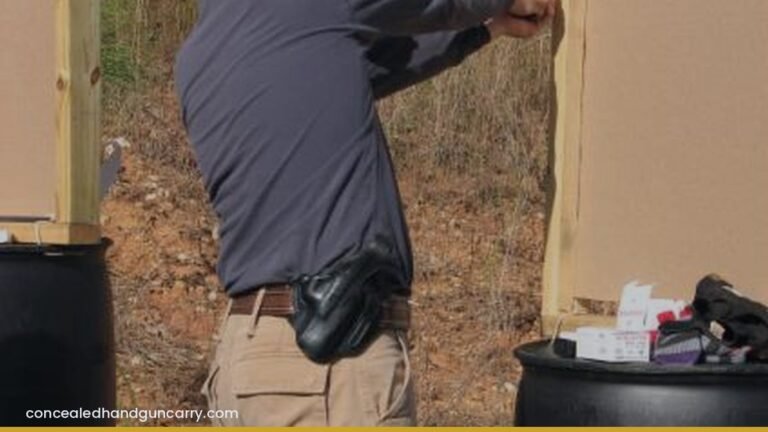
- Strong side (3–4 o’clock) is the traditional choice and where we start most new students. Natural draw, muzzle at the ground throughout, easy to conceal under an untucked shirt.
- Appendix (1–2 o’clock) is fast and conceals well when seated, but it demands more discipline because the muzzle covers your femoral artery and groin during re-holstering. Read the appendix carry guide before trying it.
- Small of back (5–6 o’clock) we discourage. You cannot see the holster, the draw sweeps your own body and anyone behind you, and falling backward onto the gun injures the spine.
- Shoulder, ankle, pocket, belly band each solve a specific problem and bring their own compromises. We cover them in pocket, ankle, shoulder and belly band holsters.
Inside or outside the waistband
An inside-the-waistband (IWB) holster puts the gun between your pants and your body, with only the grip above the belt line. It is the most concealable belt-carry method and what most of our students end up using. An outside-the-waistband (OWB) holster rides on the outside of your belt: more comfortable, faster to draw from and easier to re-holster, but it needs a longer cover garment, and in North Carolina an OWB holster that becomes visible is open carry, not concealed carry. The full comparison is in IWB vs OWB holsters.
Appendix inside-the-waistband (AIWB) is simply IWB worn forward of the hip. Off-body carry — purse, backpack, fanny pack — is the one category we steer new carriers away from, because the gun is only under your control when the bag is.
Materials and retention
Kydex, leather and hybrid
Modern holsters are molded thermoplastic (usually Kydex), leather, or a hybrid with a leather or padded backing under a Kydex shell. Each feels different on the body and has a different maintenance profile:
| Material | Retention | Comfort | Durability | Watch for |
|---|---|---|---|---|
| Kydex | Precise, adjustable, audible click | Firm; edges can dig in | Holds shape indefinitely | Poorly molded cheap shells; sharp edges |
| Leather | Friction fit; loosens with wear | Softest against the body | Years with care; eventually softens | Mouth collapsing after break-in |
| Hybrid | Kydex shell retention | Padded backing spreads pressure | Backing wears before the shell | Backing curling into the trigger guard |
For a first carry holster we usually recommend Kydex, and we explain why in Kydex vs leather vs hybrid holsters. If you prefer leather, read leather holster break-in and care first; leather is most dangerous in its first week, when it is too tight, and its last year, when it is too soft.
How much retention you need
Retention is what keeps the gun in the holster until you decide to take it out. Passive retention comes from friction and molding; active retention is a thumb break, a hood or a button you have to defeat first. Duty holsters are rated Level I through III because a uniformed officer’s gun is visible to anyone standing next to him. A concealed carrier’s gun is covered, so a well-fitted passive-retention holster is enough for most people; active retention earns its keep for open carry, physical work and regular close contact with strangers. We break the levels down and show you how to test your own holster in holster retention levels explained.
Fit: your gun, your belt, your body
Fit to your exact gun
A holster is molded or stitched for one specific model, and sometimes one configuration of that model. A holster for a Glock 19 will usually accept a Glock 17 but not a Glock 43; a holster for a Sig P365 will not hold a P365XL correctly. Add a weapon light, a red-dot optic or suppressor-height sights and you may need a different holster again. “Fits most compact semi-autos” should end the conversation; a holster that fits most guns fits none of them well.
Before you buy, confirm the exact model, barrel length, light and optic cut. If you plan to add an optic later, buy an optic-ready holster now. Our holster fit and sizing guide covers the details, including how to check fit at home with an unloaded gun.
The belt is half the holster
The most common fix we make on the range is not the holster — it is the belt. A dress belt folds under the weight of a loaded handgun, the holster tips outward, the grip prints and the draw gets slow because the holster lifts with the gun. A proper gun belt is stiff enough to carry the weight without rolling and is sized for IWB carry, usually two inches larger than your pants size. Everything you need to know is in the gun belt guide.
Clothing and body type
Holsters conceal differently on different bodies. A slim person usually conceals appendix or 3 o’clock well. A person with a larger midsection often does better at 3:30 to 4 o’clock, behind the curve of the hip, and may find appendix uncomfortable seated. Women deal with a higher waist, a shorter torso and a more pronounced hip angle, which changes almost every rule of thumb; we wrote a separate page on concealed carry holsters for women for that reason.
Clothing matters as much as body type. If you wear tucked shirts to work, you need a tuckable IWB holster or a different position. If you live in shorts and a T-shirt from April to October in eastern North Carolina, a thinner gun and a holster with a claw or wedge will matter more than anything else. If the gun outline shows through your shirt, read how to stop printing before you change guns; the fix is usually the holster angle, the belt or the shirt.
Comfort vs concealment
Every holster decision trades comfort against concealment against draw speed. A bigger gun shoots better and conceals worse; appendix is fast but digs in when you sit; a padded hybrid is comfortable and prints more. No setup wins all three. The goal is a setup you will wear every day, because the gun you left at home because the holster hurt is not protecting anyone.
Step-by-step decision checklist
- Confirm the gun. Exact model, barrel length, light, optic, sights. Write it down.
- Choose a position. Start at 3–4 o’clock unless you have a specific reason not to. Try appendix only after you have taken a class that covers it.
- Choose IWB or OWB based on how you actually dress, not on what you saw online.
- Choose a material. Kydex for a first holster; leather or hybrid once you know what you want.
- Check the four non-negotiables on the actual holster, with an unloaded gun, before you ever wear it loaded.
- Buy the belt at the same time. Do not evaluate a holster on a dress belt.
- Wear it unloaded for a day. Sit, drive, bend, climb stairs. Adjust ride height and cant.
- Practice the draw dry — 50 slow repetitions before the first live draw, following the drawing from concealment practice drills or, better, with an instructor watching in our defensive shooting class.
- Carry it for a month before you decide it does not work. Most week-one complaints are gone by week four.
Common mistakes we see on the range
- The holster came free with the gun. The nylon pouch in the box is for storage, not carry.
- Universal fit. A holster that fits everything holds nothing securely. We have watched guns slide out of these during a simple bend-and-pick-up drill.
- Soft holster. Soft fabric or soft leather that has folded shut at the mouth. The student tries to re-holster, the material folds into the trigger guard, and we stop the line.
- Wrong belt. Half our holster complaints are belt complaints.
- Buying for the gun they want, not the gun they have. A holster for a full-size pistol with a light is the wrong holster for the subcompact you actually carry.
- Carrying appendix on day one. It is a legitimate method, but not where a brand-new carrier should start.
- Off-body carry as a default. A purse gun is a gun you do not control. If you must, it is a dedicated compartment with a holster in it, and the bag never leaves your body.
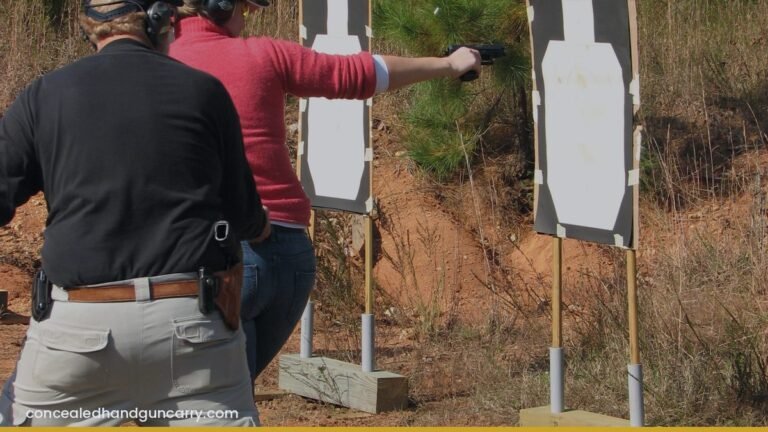
- Never drawing from it. Students show up to the NC Concealed Handgun Carry class with a holster they have owned for two years and never drawn from, and the qualification is when they find out the shirt catches on the rear sight.
Bottom line
Pick a holster that covers the trigger guard, holds the gun, keeps it in one place and stays open — then choose position, material and retention around how you actually dress and move. Put the same money into the belt, and practice the draw until the holster disappears from your thinking. If you want an instructor watching that draw from the first repetition, register for an upcoming class in Elm City and bring the holster you plan to carry.
Frequently asked questions
What is the most important feature of a concealed carry holster?
Full, rigid coverage of the trigger guard. If anything can reach the trigger while the gun is holstered, the holster is unsafe no matter how comfortable or concealable it is.
Should a beginner start with IWB or OWB?
Most of our students end up carrying inside the waistband at 3 to 4 o'clock because it conceals under normal clothes. OWB is more comfortable and faster, but it needs a jacket or long cover garment to stay concealed.
Is Kydex or leather better for a first holster?
We usually recommend a well-made Kydex holster first. It holds its shape, covers the trigger guard rigidly, stays open for re-holstering and needs no break-in. Leather is comfortable but changes shape over time.
Do I need a special belt for concealed carry?
Yes. A stiff gun belt keeps the holster upright, stops the grip from tipping away from your body and makes the draw consistent. Half of the holster problems we fix on the range are really belt problems.
Can I use one holster for different guns?
No. A holster is molded or stitched for one model and configuration, including any light or optic. Universal-fit holsters do not hold any gun securely and usually fail the trigger-guard and re-holstering tests.
Is appendix carry safe for a new concealed carrier?
Appendix carry is a legitimate method when taught correctly, but the muzzle covers your femoral artery during re-holstering. We recommend new carriers start at the strong-side hip and move to appendix only after instruction.