How to Stop Printing: Fixing a Concealed Gun That Shows
Printing is the outline of a concealed handgun showing through clothing, and it is almost always caused by one of five things: a grip that is too long or thick for the setup, a holster riding at the wrong height or angle, a belt that lets the holster tilt, a shirt that is too thin or too tight, or posture that pushes the grip out when you bend or sit. Fix the cause and the print goes away. In North Carolina, printing by a permit holder is not a crime in itself, so the goal is better concealment, not fear of arrest. Laws change — this page was last reviewed October 2026 and is general information, not legal advice.
This page goes cause by cause. It builds on the pillar on how to choose a concealed carry holster, and the full series is listed in the concealed carry holster guide.
What printing is and what it is not
Printing is the visible shape of the gun, usually the grip, pushing against the fabric so a person looking at your waistline could identify a handgun. A slight bulge is not printing; a clear outline of a grip and slide is. New carriers tend to see the second where there is only the first, and that self-consciousness makes them touch and adjust the gun constantly, which is far more noticeable than a bulge.
Printing is also not the same as exposure. Exposure is the gun itself becoming visible when a shirt rides up or a jacket blows open. Both matter, but they have different fixes: printing is about geometry and fabric, exposure is about garment length and the cut of the holster’s shirt guard.
The North Carolina legal reality
North Carolina has no statute that defines or prohibits printing, and the state allows open carry of a handgun in most places. That changes how you should think about it: a gun partially visible through or under a shirt is not automatically unlawful here the way it can be in a state that bans open carry. If you hold an NC concealed handgun permit and your gun prints, you have not committed an offense.
What still applies:
- If you are carrying concealed, you must carry your permit and valid identification and disclose that you are armed if an officer approaches you in an official capacity, under G.S. 14-415.11. Printing does not change that.
- A business or property owner can ask you to leave if they see or suspect a gun, and refusing to leave becomes trespass. Posted locations are covered in our page on where you cannot carry concealed in North Carolina.
- Displaying a gun in a way intended to alarm people is a separate matter. Printing is not that, but deliberately flashing a gun in an argument can be.
Our page on open carry vs concealed carry in North Carolina explains the difference between the two and why most permit holders choose to stay concealed even though open carry is lawful. We recommend concealing well because it keeps your options open and avoids attention, not because a print will get you arrested.
Finding the cause
Stand in front of a full-length mirror in your normal carry clothes. Face the mirror, turn sideways, bend as if picking something up, sit in a chair, raise both arms over your head, and lean to each side. Watch where the shirt pulls. Have someone else look if you can; we are poor judges of our own back pocket. Match what you see to the table below.
| What you see | Likely cause | First fix |
|---|---|---|
| Grip outline sticks out from the body at the hip | Holster tilting on a weak belt, or not enough cant | Stiff gun belt; add forward cant |
| Grip shows when you bend or sit | Grip too long for ride height; holster too high | Lower ride height slightly, or a shorter-grip gun |
| Entire gun outline visible through the shirt | Fabric too thin or too tight | Heavier or patterned fabric; looser cut at the waist |
| Grip pushes out from the belly (appendix) | No wedge; grip rotates away from body | Add a wedge at the muzzle end or a claw at the belt |
| Slide shows when arms go up | Shirt too short | Longer shirt; tuckable holster |
| Bulge moves as you walk | Holster shifting on the belt | Second clip or loop; tighter belt |
Fixes by cause
Grip length
The grip is the part that prints, because the slide lies flat against you and the grip sticks out. A gun with a shorter grip conceals much better than a gun with a shorter barrel; a compact with a long barrel and a short grip often hides better than a subcompact with an extended magazine. If you carry an extended magazine for capacity, you have chosen capacity over concealment, and that is a legitimate choice as long as you make it on purpose.
Holster ride height and cant
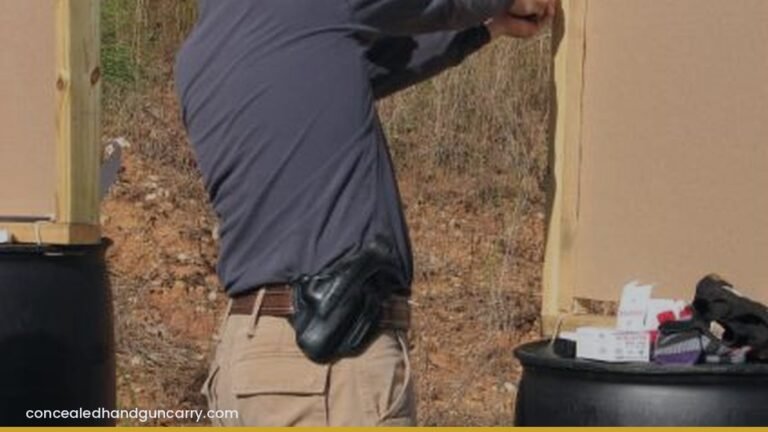
Ride height is how high the gun sits relative to the belt. Higher hides the muzzle end better and makes the draw easier, but it pushes the grip up where it prints when you bend. Lower tucks the grip in but makes the draw harder. Cant is the forward tilt. For strong-side carry at 3 to 4 o’clock, 15 to 20 degrees of forward cant rolls the grip in line with the body’s curve and reduces printing considerably. For appendix carry at 12 to 1 o’clock, cant is usually near zero and the wedge does the work. Most holsters with adjustable clips allow both changes with a screwdriver. The clock guide to carry positions covers how each position affects this.
The belt
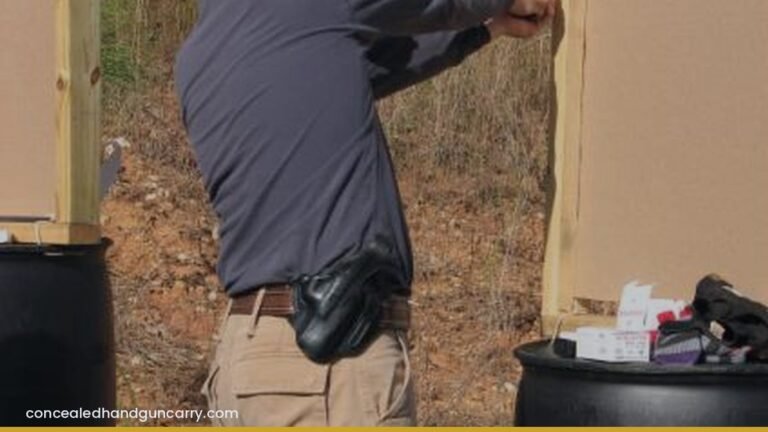
A soft belt lets the holster rotate outward under the weight of the gun, which pushes the grip into the shirt. This is the most common cause we see in class, and it is the cheapest fix. Our gun belt guide explains stiffness, width and sizing. If you have a good holster and a dress belt, fix the belt before anything else.
Wedges and claws
A wedge is a piece of foam attached to the back of the holster near the muzzle. It pushes the muzzle away from the body and rotates the grip in. A claw is a small hook on the holster near the trigger guard that presses against the inside of the belt and levers the grip inward. Both are most common on appendix holsters, and both depend on a stiff belt to push against; see our appendix carry guide for how they fit into that setup. On a strong-side IWB holster, a wedge can also help if the grip tilts out at the top.
Shirt fabric and cut
Thin, light-colored, stretchy fabric shows everything. Heavier cotton, dark colors and patterns hide the outline. Cut matters as much as fabric: a shirt that is fitted through the chest but has some ease at the waist conceals well, and a shirt that is tight at the waist does not. For IWB, the shirt needs to be long enough to stay below the belt line with your arms raised. For OWB, you are relying on an outer garment, and the discussion in IWB vs OWB holsters applies.
Posture
Bending at the waist pushes the grip out at the back; squatting at the knees does not. Sitting pushes the muzzle end into the chair and rotates the grip up and out, which a wedge or a slightly lower ride height reduces. Reaching overhead lifts the shirt. The fix is mostly awareness in the first weeks of carrying; after that, people squat for the bottom shelf without thinking about it.
Choosing the gun size honestly
At some point the honest answer is that the gun is too big for how you dress. A full-size service pistol conceals under a jacket and a loose shirt at 4 o’clock; it does not conceal under a fitted t-shirt. That leaves two choices: change how you dress or change the gun. Both are reasonable. What does not work is carrying a gun that prints badly and spending the day adjusting it, or buying a micro pistol you shoot poorly because it hides well.
In the NC Concealed Handgun Carry class we see students qualify well with a compact and then carry a much smaller gun they struggle with because it disappears under a shirt. If the small gun is the one you will actually carry every day, practice with it until you shoot it well. If you can conceal the compact with a better belt and holster, that is usually the better trade.
The nobody-is-looking reality check
New carriers believe everyone can see the gun. They cannot. People do not look at waistlines; they look at faces and phones. A slight bulge reads as a phone, a wallet, a multitool or a medical device. We have had students carry in our classroom for an hour before anyone, including other permit holders, noticed. The things that actually draw attention are the behaviors: repeatedly touching the hip, tugging the shirt down, turning the body away from people, and avoiding the reach that would lift the shirt.
Set the gun up well in the morning using the fixes above, then leave it alone. If you feel the need to check it, look in a window reflection instead of touching it. After a few weeks the self-consciousness fades, and that, more than any piece of gear, is what stops the print from mattering.
Bottom line
Printing is a geometry problem with five usual causes, and the belt is the one to fix first, followed by cant, ride height, fabric and finally gun size. North Carolina law does not make printing a crime for a permit holder, so the point is good concealment, not fear. If you want to work through your setup in front of an instructor and shoot the qualification with the gun you will actually carry, register for the NC Concealed Handgun Carry class in Elm City.
Frequently asked questions
Is printing illegal in North Carolina?
There is no North Carolina statute that makes printing an offense, and open carry is lawful in most places in the state. A permit holder whose gun outlines through a shirt has not committed a crime, though a business can ask you to leave. This is general information, not legal advice.
What causes a gun to print the most?
The grip. The slide and muzzle sit flat against the body, but the grip sticks out and up, and a long or thick grip pushes the shirt out. Holster cant, a weak belt and thin fabric make it worse.
Does a wedge or claw stop printing?
Often, yes. A wedge at the muzzle end rotates the grip into the body; a claw presses against the belt to do the same from the other side. Both work best with a stiff belt and are most common on appendix holsters.
Should I carry a smaller gun to stop printing?
Sometimes. A shorter grip hides more easily than a shorter barrel. But a gun you shoot poorly is a bad trade for a little less printing; fix the belt, holster and shirt first, then decide about the gun.
Will people notice if I print a little?
Almost never. Most people are looking at their phones or at your face, and a slight bulge at the waist reads as a phone or a wallet. Checking and adjusting the gun constantly draws more attention than the print does.