
This class is not about scoring points. It is about saving your life in a deadly force confrontation and going home to your family. Limited to 10 students. Designed for holders of a Concealed Handgun Carry Permit. Scheduled on request — call 252-937-8198.
Who should take this class?
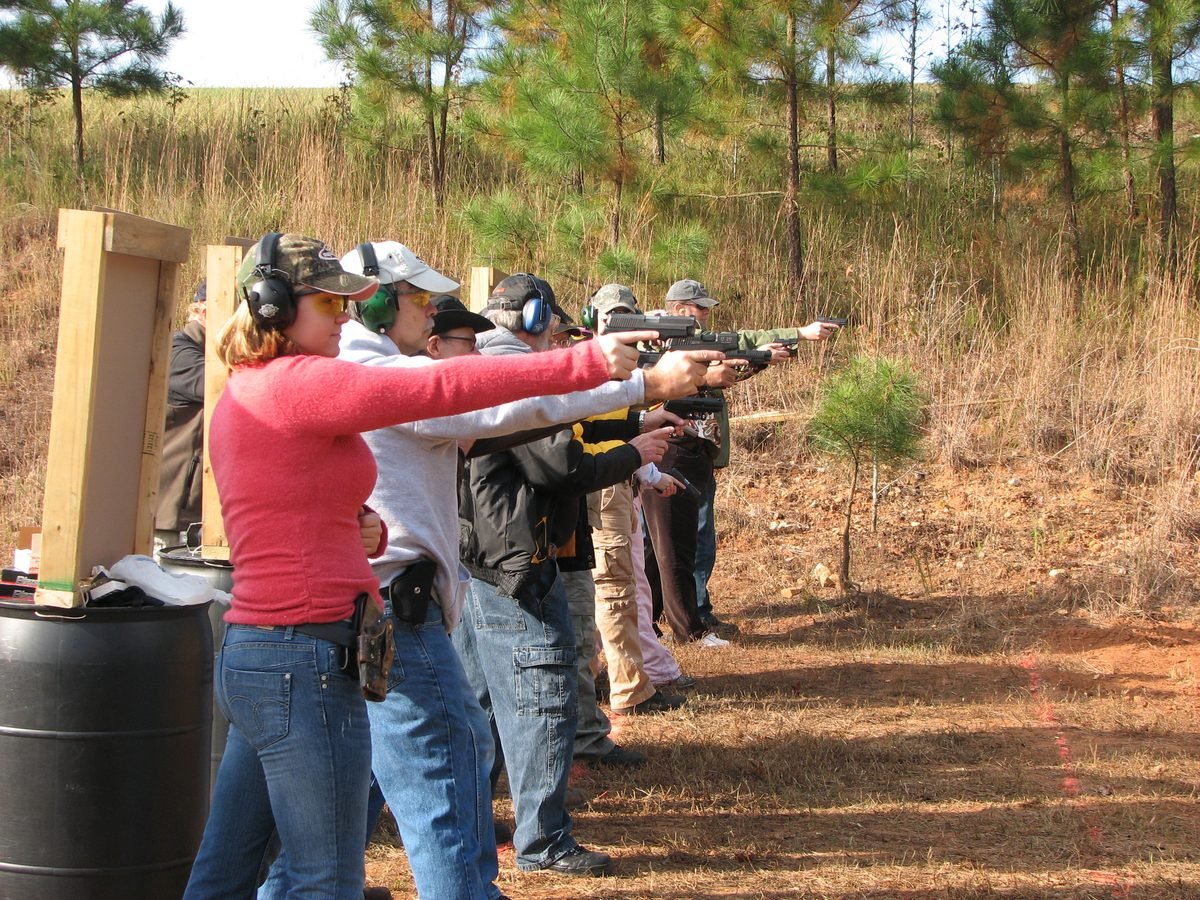
If you carry a concealed handgun, keep a handgun at home for personal protection and have a Concealed Handgun Permit, then you would benefit from this class. Even if you are an expert shot and active in the action shooting sports, you will receive valuable and potentially life-saving information in this class.
There are many valuable benefits to competition shooting, but too often competition shooting teaches too many skills that are counterproductive to real-life combat defensive shooting situations. This class will point out some of those differences THAT COULD SAVE YOUR LIFE.
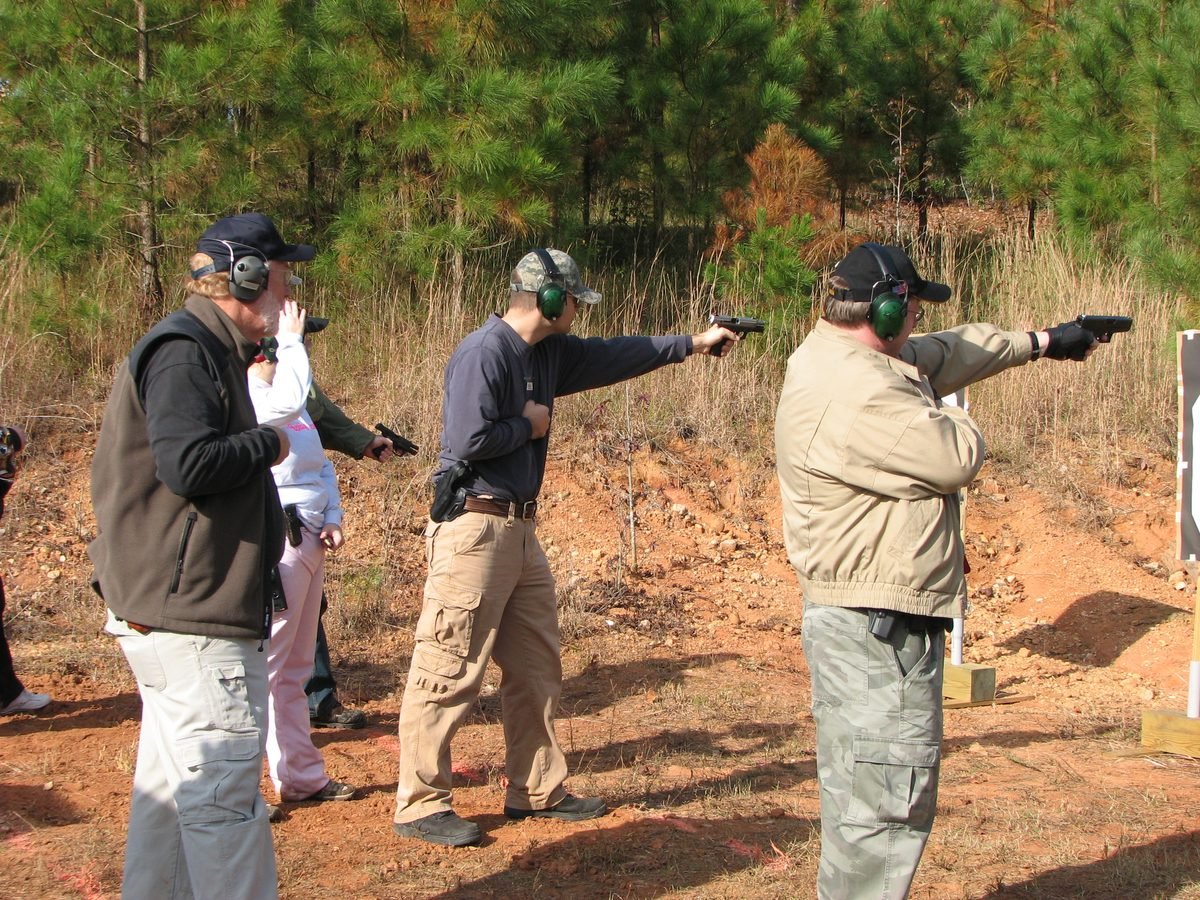
This class is about how to increase your survivability in a deadly force encounter. While we will reinforce basic shooting fundamentals, our emphasis will be on safety and the defensive application of your concealed carry handgun in practical situations. Many of the techniques presented in this class are not taught to the average law enforcement officer. There are very few classes with this level of training available for qualified civilians.
Note: We have consolidated the Defensive Shooting Class and the Advanced Gun Fighting Skills Class into one class. By utilizing the feedback from our students, we have developed a course that we believe will surpass any in the country when you consider course content, price and instructor experience.
Training objectives
- Advance the student to a higher level of comfort with their handgun.
- Increase the abilities of the student to not just survive but to WIN a gunfight.
- Enable the student to safely use a handgun in a stressful 360-degree environment.
What you will be taught
- Loading your handgun under stress
- Loading your handgun with one arm/hand
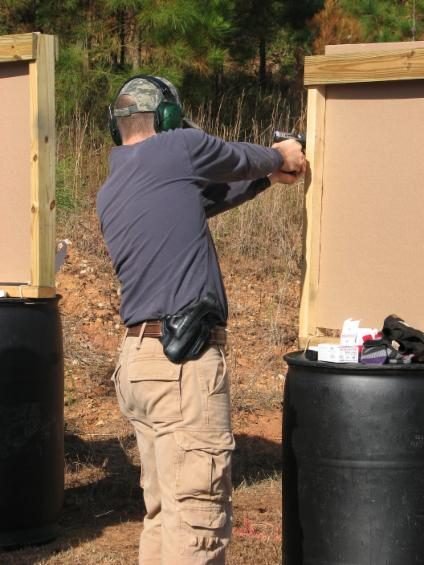
- Shooting on the move (LOTS of shooting on the move)
- Shooting from retention
- Support-hand shooting techniques
- Point shooting — advantages and disadvantages
- Moving from the line of attack
- Taking and holding a person at gunpoint (the safe and proper way)
- Handling your handgun safely in a 360-degree environment
- Shooting moving reactive targets while you are on the move
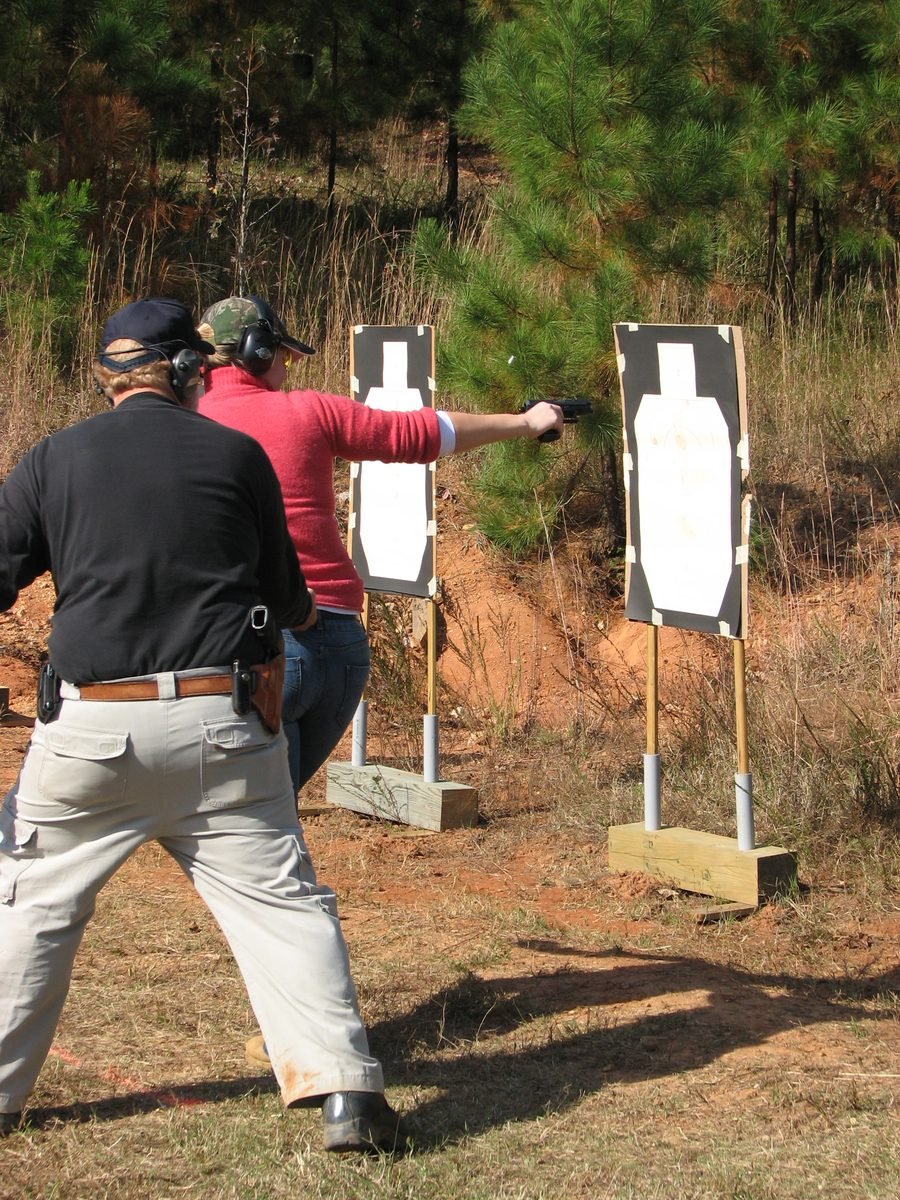
Class information
- This class is approximately 6 hours. Class size is limited to 10 students.
- Cost: $125.00 (please confirm when registering). Your registration is not complete until we receive your payment.
- Participants are expected to be comfortable with their handgun and the application of SAFETY at all times.
- Participants who have taken our previous classes are aware of the nice training certificates we present, and this class is no exception.
What equipment will I need?
Handgun: Your handgun should be one that you carry or intend to carry. Please do not bring the hand cannon you use to bear hunt! We encourage students to bring the gun you carry on a regular basis, as this is the gun you should practice with. Do not bring a cowboy or western styled single-action handgun — even if this is your carry gun, this style is far too slow to load and reload and not suitable for this class. A .380 ACP handgun is the smallest caliber allowed (a .22 cal. handgun is not allowed). You will be at a disadvantage if you use a small pocket-sized pistol — you will not be able to perform all the drills safely with a small .380. It must be a defensive-type firearm as opposed to a target pistol; no custom competition pistols. Your handgun should be one of absolute reliability. If you carry a small lightweight .38 cal., your hand will be hurting by the end of the day as you will be shooting approximately 300 rounds (weight-lifting gloves work well).
Magazines: At least three magazines for your semi-automatic — bring more if you have them. If you are shooting a revolver, at least one speed loader designed for your revolver, more if you have them. You need enough magazines or speed loaders to fire 30 rounds before having to reload them, and the ability to retain two magazines on your belt.
Holster: You MUST HAVE a properly fitting holster for your handgun, designed for your particular handgun and worn on your strong side at the waist. No generic one-size-fits-all holsters. No cross-draw or shoulder holsters (safety). Strap-type retention devices are a danger in re-holstering and will not be allowed. You should be able to safely holster your handgun without using both hands — inexpensive Kydex holsters work great; nylon clip-on holsters are not satisfactory for this class.
Ammunition: You will need 300 rounds. Some ammunition is scarce — do not wait until the last minute to purchase it. If you plan to use hand loads, please let me know prior to your attendance.
Safety equipment: Hearing protection (electronic is best because it allows you to hear all range instructions), eye protection, and a cap, hat or visor to protect your face from hot shells fired by the shooter next to you. No shorts or open-toe shoes; shoes with ankle support are strongly advised; please wear long pants.
Other equipment: Lunch and plenty of fluids, rain gear, folding chair, pocket notepad and pen. There is a restroom on site. A tote or range bag will keep all your equipment together — a five-gallon bucket with a lid makes a good carry device and can double as a seat.
Why static range practice is not enough
Ask your attorney about the difference between perfect self-defense and imperfect self-defense. Most likely, he will tell you that it is the difference between training and no, or very little, training in the use of deadly force.
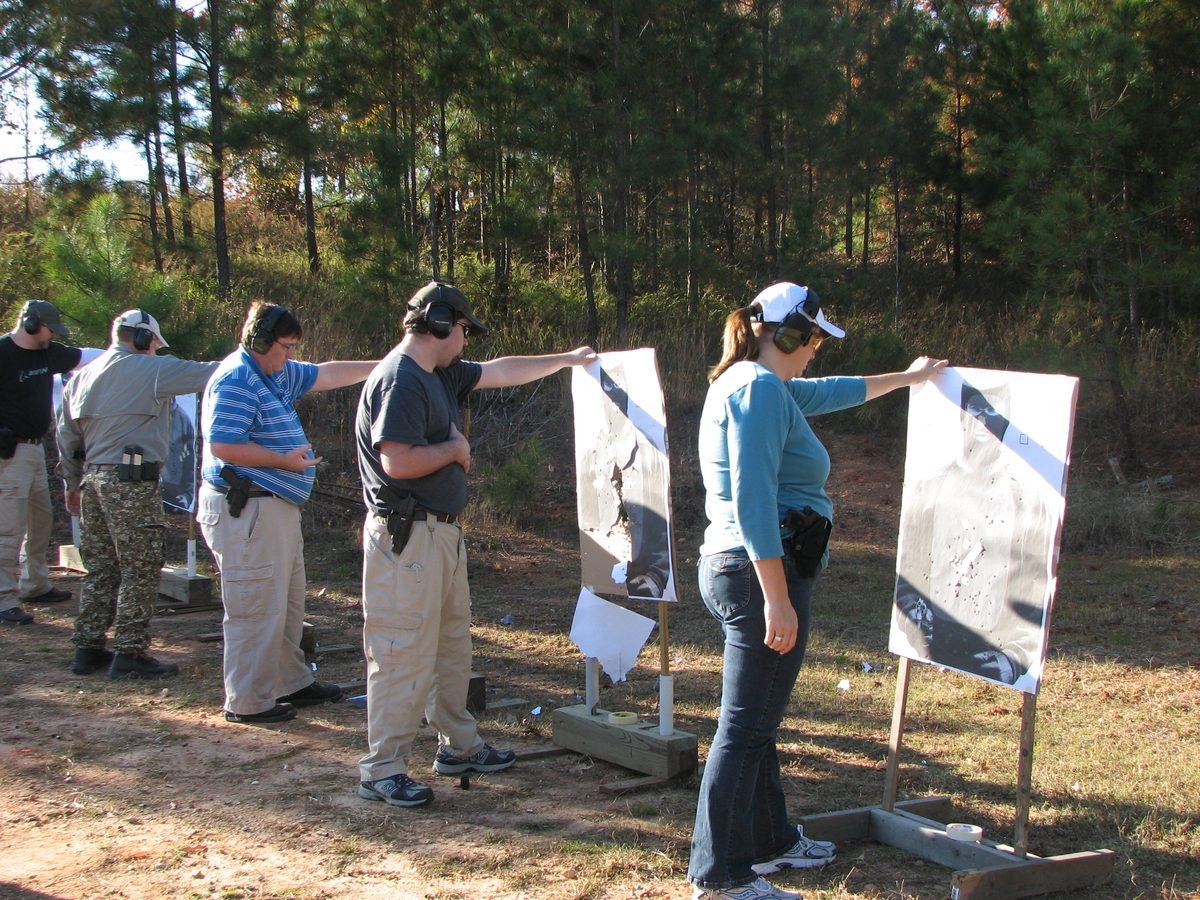
If most of your training consists of standing in front of a static target and shooting round after round from a static position, you are NOT training for a life-or-death confrontation with an armed suspect. You are only fooling yourself and building a false sense of security. In short, you are setting yourself up for possible failure. You can help yourself overcome this self-defeating training regimen by taking advantage of more modern training in the use of firearms and deadly force.
Most citizens who obtain their concealed handgun permit do not follow up with proper defensive training. This is often caused by a lack of suitable training designed just for the average citizen. We designed this course just for you. It emphasizes shooting under stress and teaches valuable skills that will enable you to better handle the stress of a use of deadly force incident.
Remember: if you are ever in a use of deadly force incident, your training will be one of the first things your defense attorney will want to know about. If you have not had training beyond your concealed carry class, the prosecution will have a much better chance of making you appear incompetent with a firearm. Your testimony has to be based upon knowledge and training you had PRIOR to the shooting.
Feedback from our Defensive Shooting students
In my 20 years of law enforcement I never received such thorough “real life” training in one day. Many of the things you taught us on Saturday were taught to me by the police department, but over several years of twice-a-year one-day training sessions. Your night firing training was first rate and by far exceeded what I was able to do while with the police department.
— Joe C., retired law enforcement officer
Safety is the top priority to Chris for the well being of the students regardless of their experience or lack of. His knowledge of handguns and the ability to quickly learn his students puts Chris’ instructional capabilities world class.
— Mike B.