What Is a Sight Pusher? How It Works, When You Need One, and What It Cannot Do
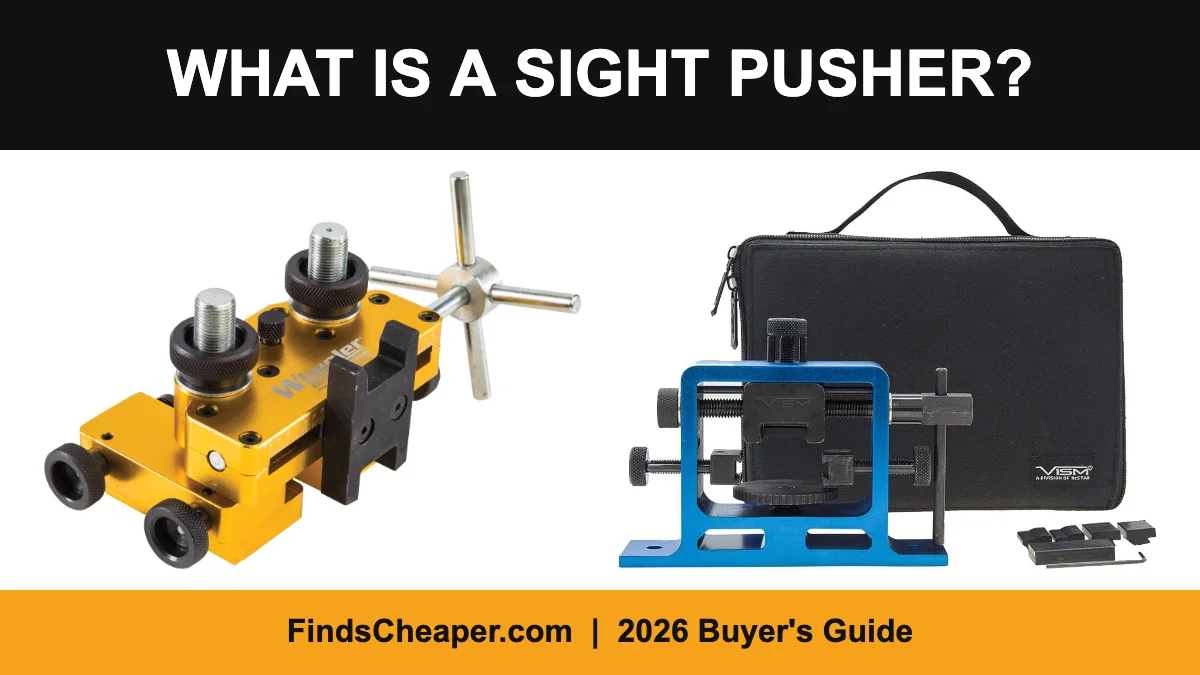
A sight pusher is a hand tool that clamps a pistol slide and uses a threaded screw to push a dovetailed sight sideways out of, or into, its slot. It replaces the traditional hammer-and-punch method, which works but slips, and a slipped punch gouges the slide. That is the entire idea: controlled sideways force instead of impact. Here is how the tool works, which sights it applies to, and what to look for if you are buying one.
How a sight pusher works
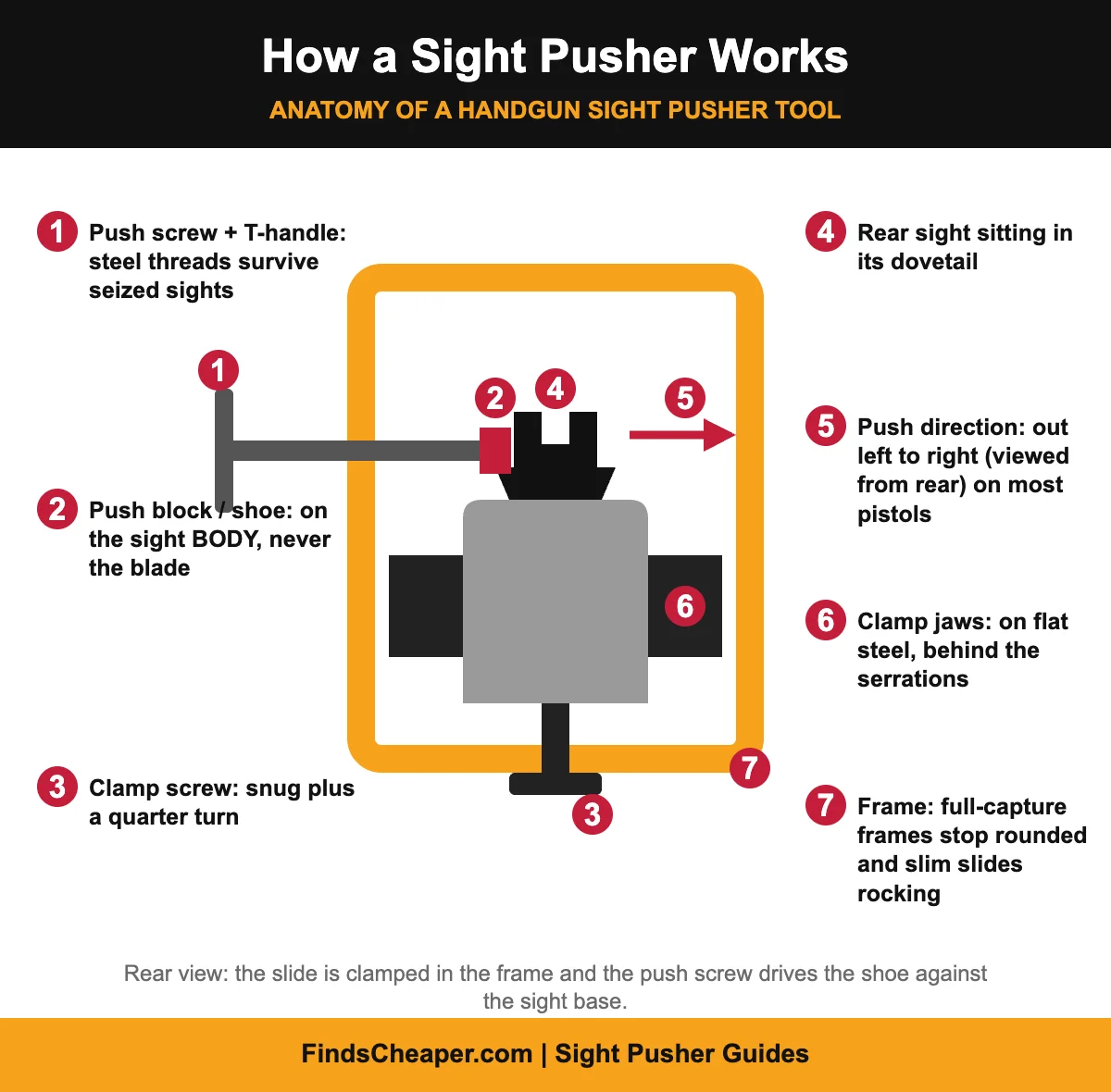
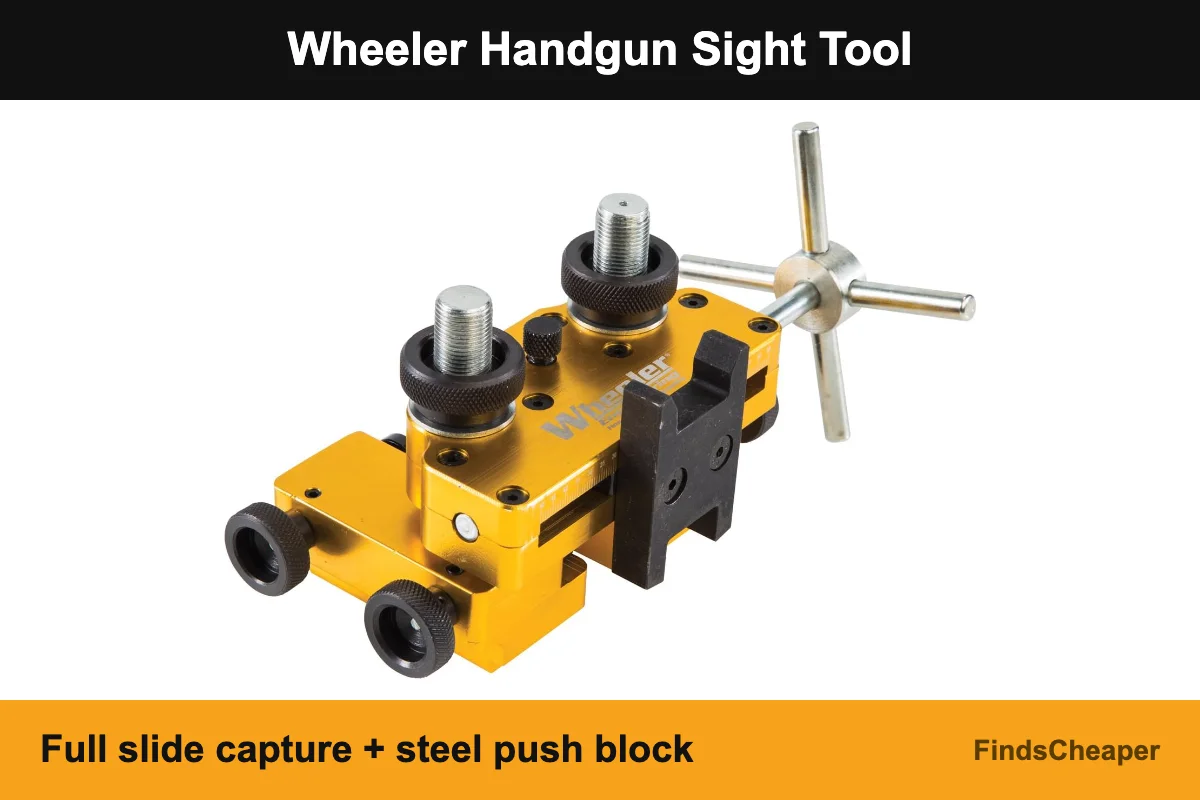
Three parts. A clamp holds the slide still; it may be two jaws, or a frame that captures the whole slide. A push screw runs across the top of the slide at sight height. A shoe on the end of the screw matches the shape of the sight’s back face so the force spreads across the sight body instead of a single point. Turn the screw, the shoe presses the sight, the sight slides along the dovetail. A quarter turn moves it a fraction of a millimeter, which is also why pushers are used to fine-tune windage after a sight is installed.
Watch: “Wheeler Engineering Armorer’s Handgun Sight Tool” by Battenfeld Technologies on YouTube.
What a dovetail is, and why it matters
Most pistol rear sights sit in a dovetail: a trapezoidal slot cut across the slide, wider at the bottom than the top, so the sight cannot lift out and can only move sideways. The sight is a friction fit, sometimes with a set screw. A sight pusher only works on dovetailed sights. Sights that are screwed in from below (Glock, M&P and most Sig front sights), pinned (many revolvers), or staked (old GI 1911 fronts) are not moved by a pusher. Dovetail angles vary (60, 65, 90 degrees); the pusher does not care, the shoe does.
Types of sight pusher
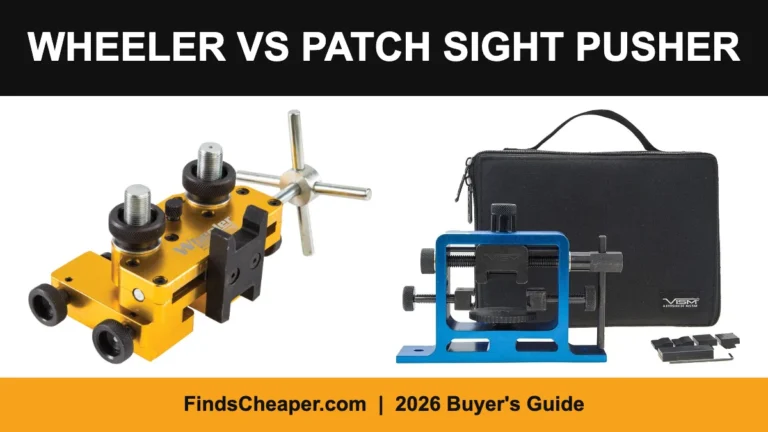
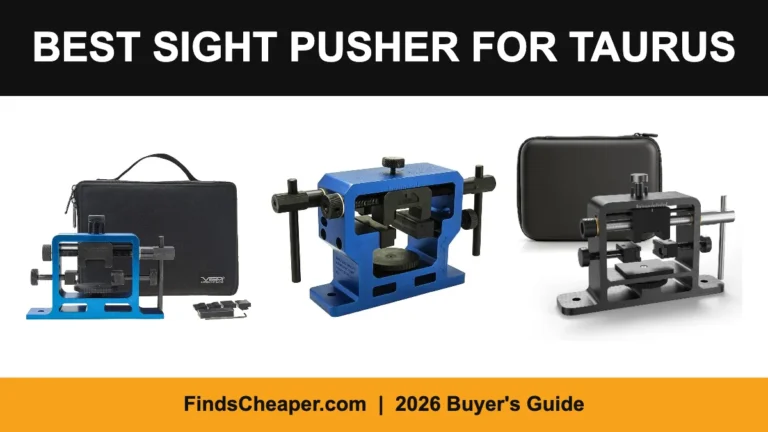
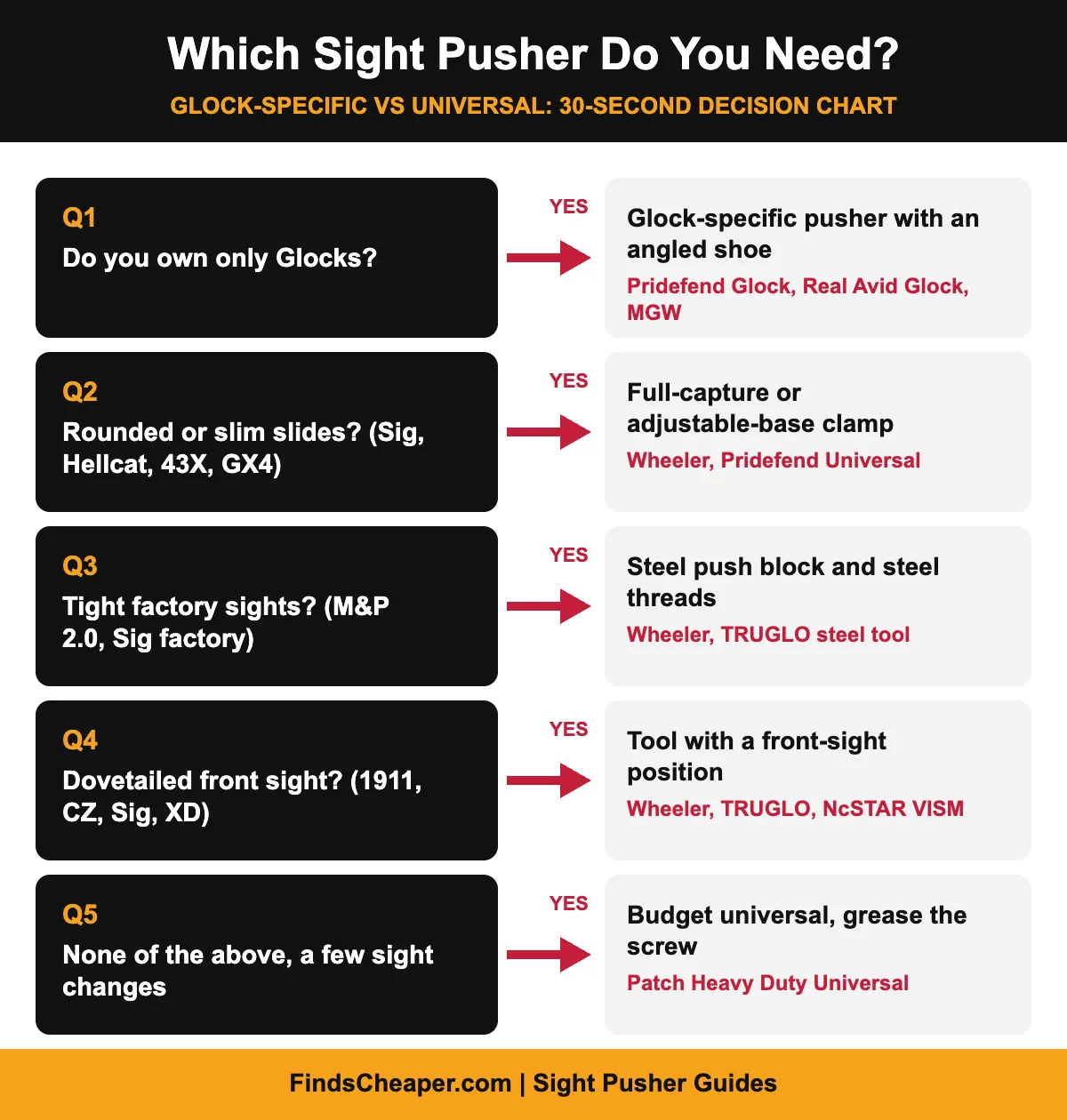
- Universal. Adjustable clamp, swappable shoes, meant to fit most pistols. Quality ranges from cast aluminum to machined steel. See best universal sight pusher.
- Model-specific. Cut for one slide profile and one sight style, usually Glock. Fits that pistol better than a universal does. See best sight pusher for Glock.
- Rear-only vs front-and-rear. Most pushers only reach the rear sight. Front adapters matter for pistols with dovetailed front sights (1911, CZ, Sig).
- Gunsmith / bench. Machined steel, interchangeable shoe plates for dozens of models, higher price. MGW’s Sight-Pro is the common one.
What to look for
A clamp that holds the slide on both sides (or captures it fully) so it cannot rock. A steel push block and screw, because aluminum threads strip under a seized sight. A shoe that matches your sight’s back face: angled for Glock-style sights, flat for Sig, M&P, XD and most others. Front-sight capability only if your front sight is dovetailed. Adjustable clamp height if you own slim slides. Our ranked picks are in best sight pusher tools.
Do you need one?
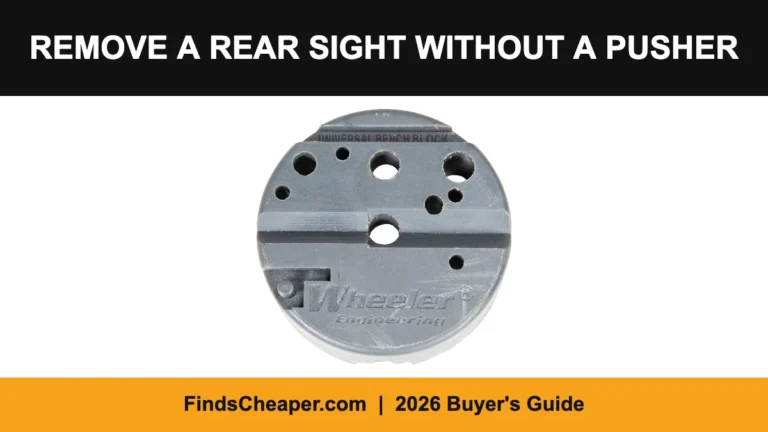
Not for one easy sight on one pistol; a brass punch and bench block will do it. Yes for night sights, tight factory sights, finishes you care about, or more than one pistol. The break-even is worked out in is a sight pusher worth it, and the punch method is in how to remove a rear sight without a sight pusher.
Watch: “Proper use of a sight pusher to change out iron sights” by Rolling with the Morgans on YouTube.
Using one
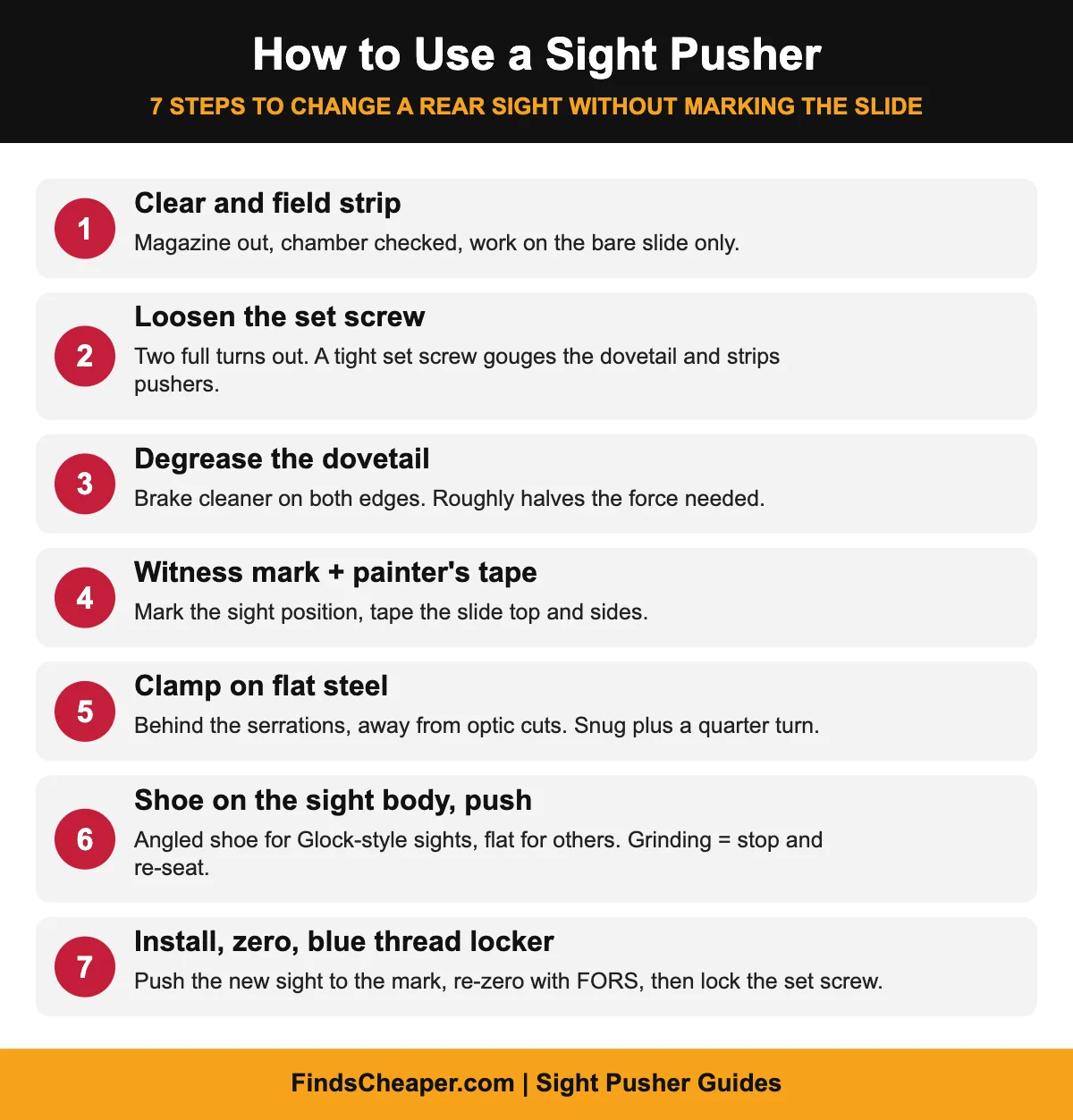
Clear and field strip, loosen any set screw, degrease the dovetail, tape the slide, clamp on flat steel, seat the shoe on the sight body, turn until it moves. The full step-by-step is how to use a sight pusher.
FAQ
What is a sight pusher used for?
Removing, installing and adjusting dovetailed pistol sights without a hammer and punch.
Does a sight pusher work on all guns?
Only on dovetailed sights. Screw-in, pinned and staked sights are not moved by a pusher. Rifle sights on round barrels need a barrel-clamp tool.
Is a sight pusher the same as a sight tool?
Usually. “Sight tool”, “sight installation tool” and “sight pusher” are used interchangeably for the same clamp-and-screw device.
We may earn a commission from qualifying purchases made through links on this page, at no extra cost to you.