Do You Loctite Pistol Sights? Blue, Not Red, and Only on the Set Screw
Thread locker on pistol sights is one of those topics where the forums split and the answer is simple. Yes, use it, but only in two places and only one strength. Put it on the set screw that holds a rear sight in its dovetail, and on the nut that holds a Glock-style screw-in front sight. Use blue, medium strength. Never use red, and never put any thread locker in the dovetail itself. Here is why, and what to do if a previous owner did.
Where thread locker goes
- Rear sight set screw. One small drop on the threads, screw snugged against the dovetail floor. Keeps the sight from walking under recoil without making it permanent.
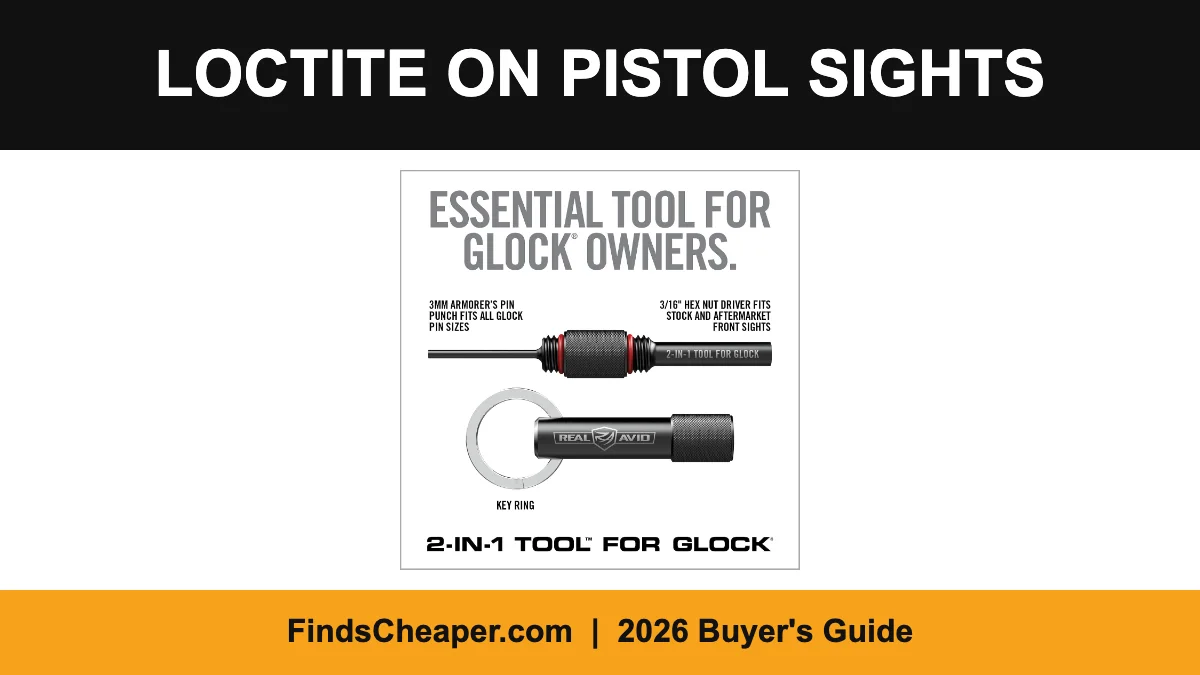
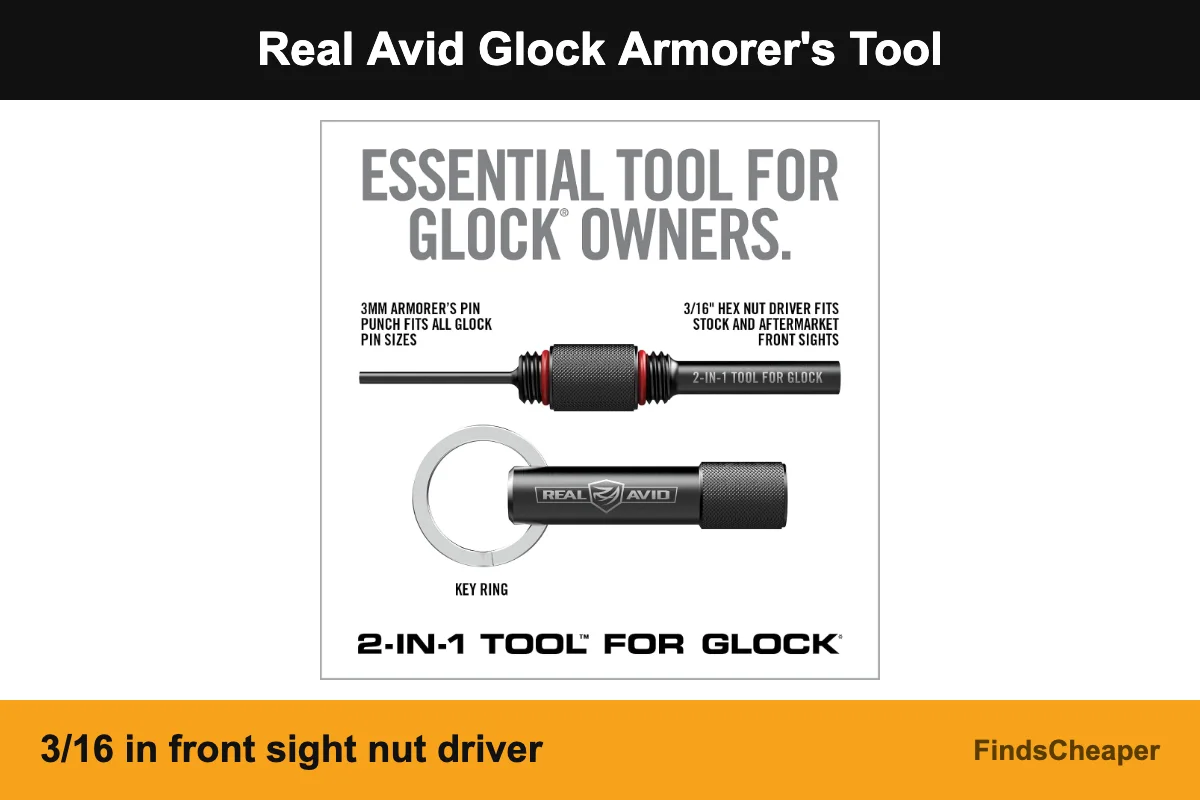
- Glock-style front sight nut. One drop on the screw threads, nut snugged with the 3/16 driver. This is the classic application: Glock front sights that come loose almost always had no thread locker.
- Adjustable sight screws on some rear sights, per the maker’s instructions.
Where it never goes
Not in the dovetail. A dovetailed sight is a friction fit; it holds by the taper and, if present, the set screw. Thread locker in the dovetail glues the sight to the slide, and the next time you or a gunsmith needs to move it, it will not move and a seized-sight sequence with heat is the only way out. Also not on tritium vials or anywhere near a fiber-optic rod; some compounds attack plastics.
Which strength
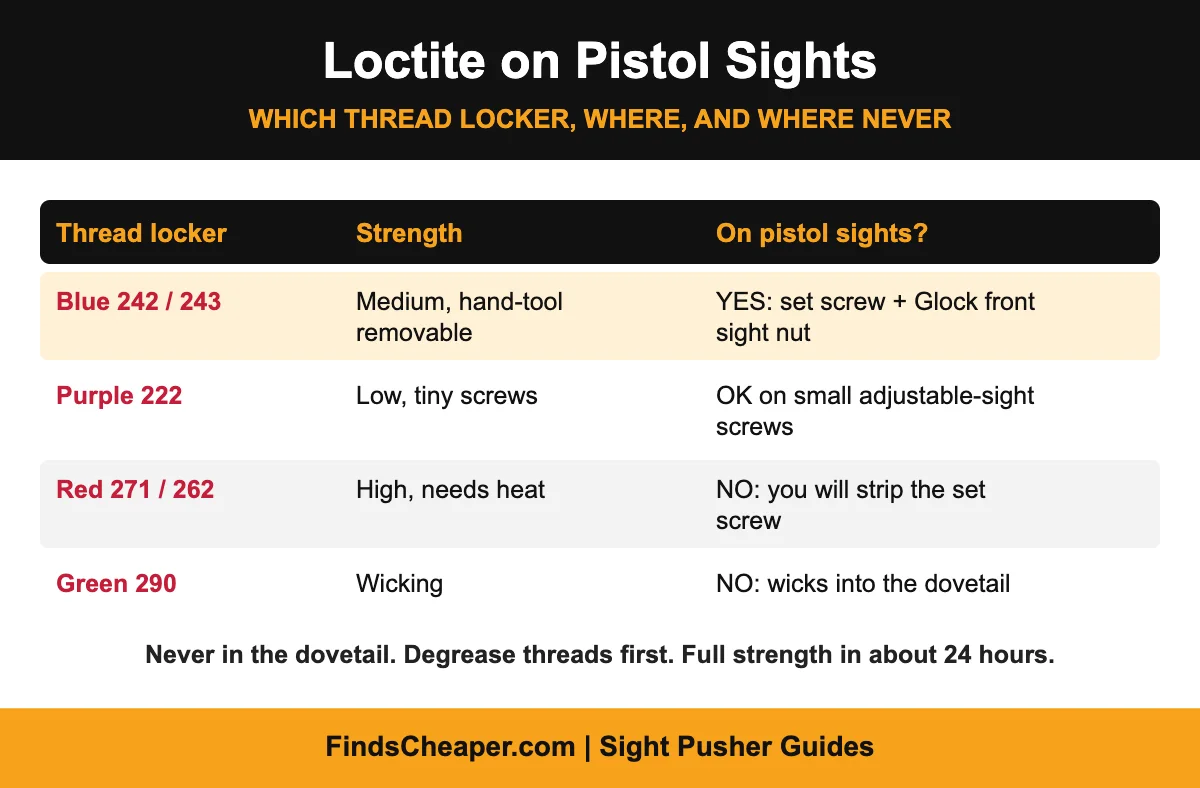
| Type | Strength | Pistol sights? |
|---|---|---|
| Blue (242 / 243) | Medium, removable with hand tools | Yes. The only one to use. |
| Purple (222) | Low, for very small screws | Acceptable on tiny adjustable-sight screws. |
| Red (271 / 262) | High, needs heat to remove | No. You will strip the screw trying to remove it. |
| Green (290) | Wicking, for pre-assembled parts | No. It wicks into the dovetail. |
Watch: “Quick Tip: How to properly use Loctite” by Brownells, Inc. on YouTube.
Cure time
Blue thread locker fixtures in about ten minutes and reaches full strength in roughly 24 hours. Shooting after an hour is fine for most people; waiting overnight before a match or carry is the cautious answer. Degrease the threads with alcohol first; thread locker does not cure well on oily threads, which is the usual reason a Glock front sight loosens again.
Removing a thread-locked sight
Blue on a set screw backs out with the correct driver and a little pressure. Red, or anything in the dovetail, needs heat: a hair dryer or heat gun on low for a couple of minutes softens the compound, then the set screw turns and the sight pushes. The full approach is in rear sight stuck and will not move. Do not use open flame on a slide with tritium sights.
Watch: “The Best Way to Loctite Our Rear Sight” by Advantage Tactical Sight on YouTube.
In the sight-change sequence
Thread locker is the last step: sight pushed to the witness mark with your sight pusher, zero confirmed at the range, then a drop on the set screw and snug. If you apply it before zeroing you will be loosening it again. The whole order is in how to use a sight pusher.
FAQ
Should I put Loctite on my Glock front sight?
Yes, one drop of blue on the screw threads, nut snugged. Loose Glock front sights almost always had none.
Can I use red Loctite on sights?
No. It needs heat to release and you will strip the small set screw trying.
Do I need thread locker if my sight has no set screw?
No. A properly fitted dovetail holds by friction. Do not add thread locker to the dovetail.
We may earn a commission from qualifying purchases made through links on this page, at no extra cost to you.