What Size Gun Safe Do I Need? A Practical Sizing Guide for 2026
The short answer to “what size gun safe do I need” is: one size bigger than your current collection, measured by the longest item you will store and the space you can actually give it, not by the gun count printed on the box. A single handgun kept for home defense needs a lockbox or quick-access safe with an interior a little longer than the pistol. A few long guns need a cabinet or safe that is taller than your longest barrel and deep enough for optics. A growing collection, plus documents and valuables, is where a full-size safe makes sense, and where most people regret buying too small.
This guide walks through how to size a safe from the inside out: measuring what you own, reading capacity ratings with healthy skepticism, matching the safe to the room it will live in, and knowing when a small handgun box is the right size rather than a compromise. We base it on product listings, manufacturer dimensions and general safe-storage practice, and we point to listing details you should confirm before buying.
Start with what you actually store
Sizing goes wrong when people start from the safe instead of the contents. Before you look at a single listing, make an inventory. It takes ten minutes and saves a costly return or, worse, a safe that is full the week it arrives.
- Handguns: note overall length and height of each, and whether any carry a light, optic or extended magazine. A pistol with a weapon light needs a noticeably deeper or longer interior.
- Long guns: measure the overall length of the longest rifle or shotgun, and note which ones have scopes. Scopes, bolt handles and slings are what eat interior width.
- Everything else: passports, birth certificates, a backup drive, jewelry, cash, a spare key set. Many owners end up storing as much paperwork as hardware.
- Future plans: if you expect to add anything in the next few years, write it down now. Moving a heavy safe twice is the most expensive way to upgrade.
Once you have the list, the question changes from “how many guns” to “what is the longest, widest item, and how much shelf and door space do I need for the rest.” That is a far more reliable way to answer how big of a gun safe you need.
Gun safe sizes, from lockbox to full-size
Gun safe sizes fall into a few broad tiers. Exact dimensions vary by brand, so treat these as categories and always confirm the numbers on the listing.
Portable lockboxes and car safes
These hold one handgun plus a magazine or two. They are slim enough to slide under a car seat or into a suitcase, and usually include a steel cable to tether them to a seat frame or bed frame. Weight is low, which is the point, so the cable or a mounting point is what keeps them from walking off. If you mostly travel or need a vehicle option, our car gun safe picks and portable gun safe guide cover this tier in detail.
Quick-access handgun safes
Slightly larger, often designed for a nightstand, drawer or closet shelf, and built around a fast lock such as a keypad, RFID tag or fingerprint reader. Interiors typically take one full-size pistol, sometimes two smaller ones. For bedside storage specifically, see our nightstand gun safe guide.
Small and mid-size safes and cabinets
These step up to multiple handguns, a shelf for documents, or a handful of long guns in a tall, narrow cabinet. Cabinets are lighter and easier to place, while safes in this tier add heavier construction. Our guides to the best small gun safes and gun cabinets compare the trade-offs.
Full-size long-gun safes
Tall, deep and heavy, with racks for long guns, door organizers and shelving. This is where you see capacity claims such as a 24-gun or 26-gun rating, the kind of numbers buyers search for when they look up a Cannon or Winchester model. These safes need floor space, a solid floor and a delivery plan. Start with our best rifle safe roundup if long guns are your main concern.
Why the gun count on the box is a best case
Capacity ratings on large safes are generally calculated with long guns packed tightly, often without scopes, in every available slot including door panels. Real collections do not look like that. A scoped bolt-action rifle takes the space of two or more unscoped guns, and you still need to reach the one in the back without dragging everything else out.
A common rule of thumb among safe owners is to expect a realistic capacity well below the advertised number, often somewhere around half to two-thirds of it once optics and shelving are in play. That is not a defect in any one brand; it is simply how the industry counts. So when you compare a 24-gun capacity safe with a 26-gun capacity safe, the two-gun difference on paper matters much less than the interior width, the rack layout and whether the shelving can be removed or reconfigured.
When you read a listing, look for:
- Interior height, width and depth, not just exterior size.
- Whether the rack is fixed, removable or adjustable.
- How much of the stated capacity depends on a door organizer.
- Usable shelf space above or beside the long-gun section.
If a listing gives only exterior dimensions, subtract the wall and door thickness and the lock housing before assuming anything fits. When in doubt, ask the seller or check the manual for an interior figure.
Small safes: when “small” is the right size
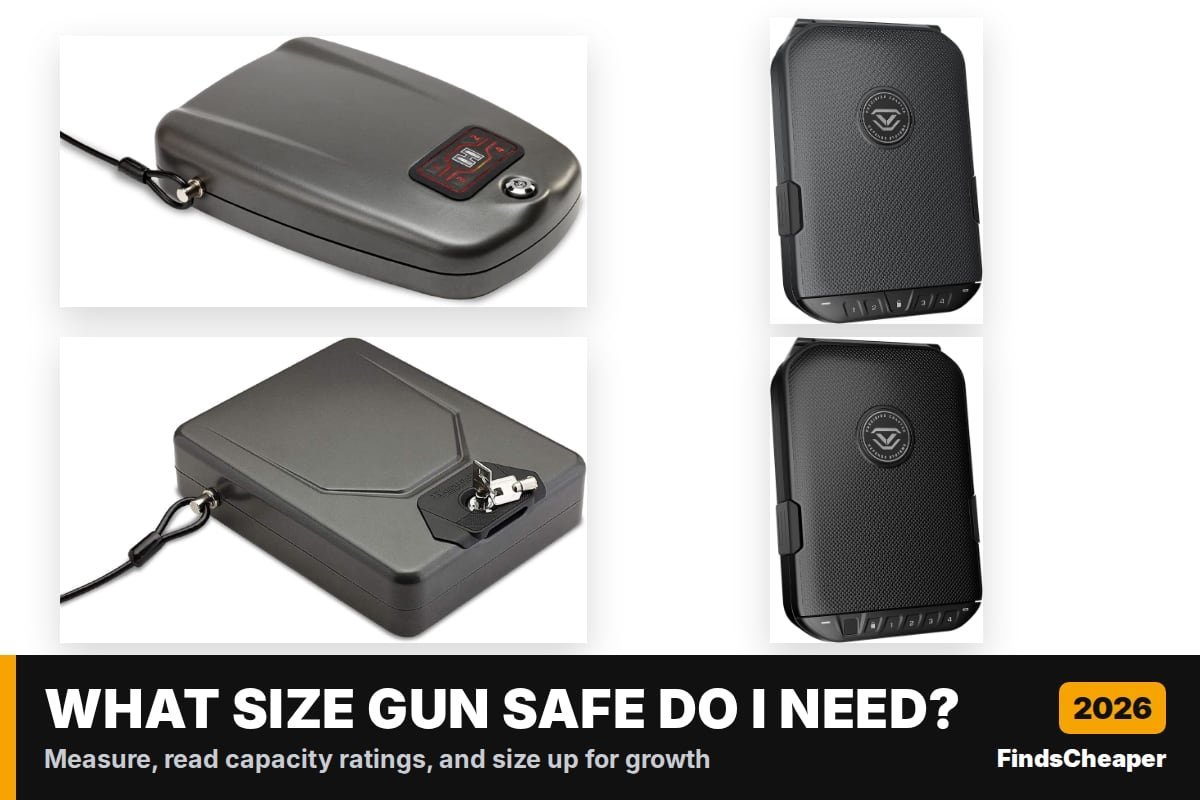
Not everyone needs a large safe. If your goal is to keep one handgun secured and accessible at home, in a vehicle or while traveling, a correctly sized handgun box is the right tool, not a compromise. The key is matching interior length to the pistol you own. The four products below show how much variation exists even within this one tier.
| Product | Exterior (listing) | Interior (listing) | What the listing says fits | Lock/access | Price band at writing |
|---|---|---|---|---|---|
| Hornady Lockbox (Alpha Elite XL) | 10.25 x 8 x 2.75 in | Check listing | 1911 size pistols, 3-inch revolvers | Barrel key | Varies, check current price |
| Hornady RAPiD Safe RFID | 12.7 x 8.7 x 2.9 in | 9 x 7.7 x 2.2 in | Most 1911 size pistols, 4-inch revolvers | RFID tags, key backup | $100 to $200 |
| Vaultek LifePod 20 | 12.25 x 8.5 x 2.88 in | 9.625 x 7.25 x 2.125 in (see note) | Full-size handgun up to 9.25 in long | Keypad, key backup | $100 to $200 |
| Vaultek LifePod 20 Biometric | Check listing | 9.625 x 7.25 x 2.125 in | Full-size handgun up to 9.25 in long | Fingerprint, keypad, key backup | $200 to $300 |
Note: the LifePod 20 listing gives two different interior figures, one in the bullet points and a smaller one in the product description. The smaller figure may describe the space with the removable tray installed, but the listing does not say so directly, so measure your pistol against the smaller number to be safe, or confirm with the brand.
Hornady RAPiD Safe RFID
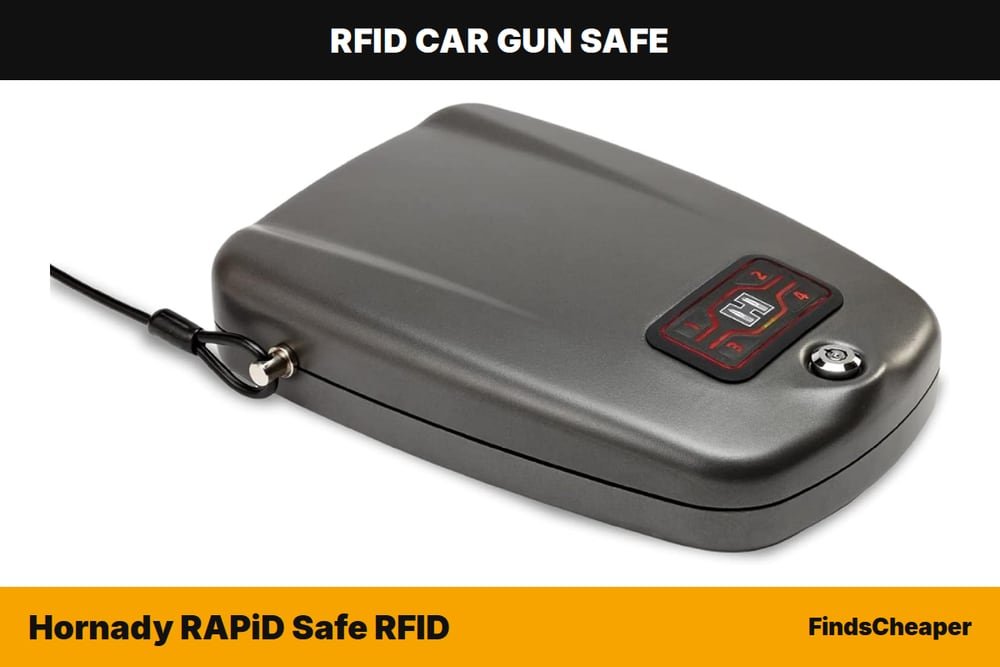
The RAPiD Safe is a good example of a quick-access box sized for one full-size pistol. The listing gives an interior of 9 x 7.7 x 2.2 inches and says it fits most 1911 size pistols and 4-inch revolvers. Access is by RFID wristband, key fob or sticker, with up to five tags programmable and a barrel key as backup. The housing is listed as 14-gauge steel, it runs on AC with battery support, and it is listed as California DOJ approved and TSA compliant for checked luggage. If you want this size for a nightstand, read our Hornady RAPiD Safe RFID review or compare RFID options in our RFID gun safe guide. At the time of writing it sat in the $100 to $200 range; check the current price on Amazon.
Vaultek LifePod 20
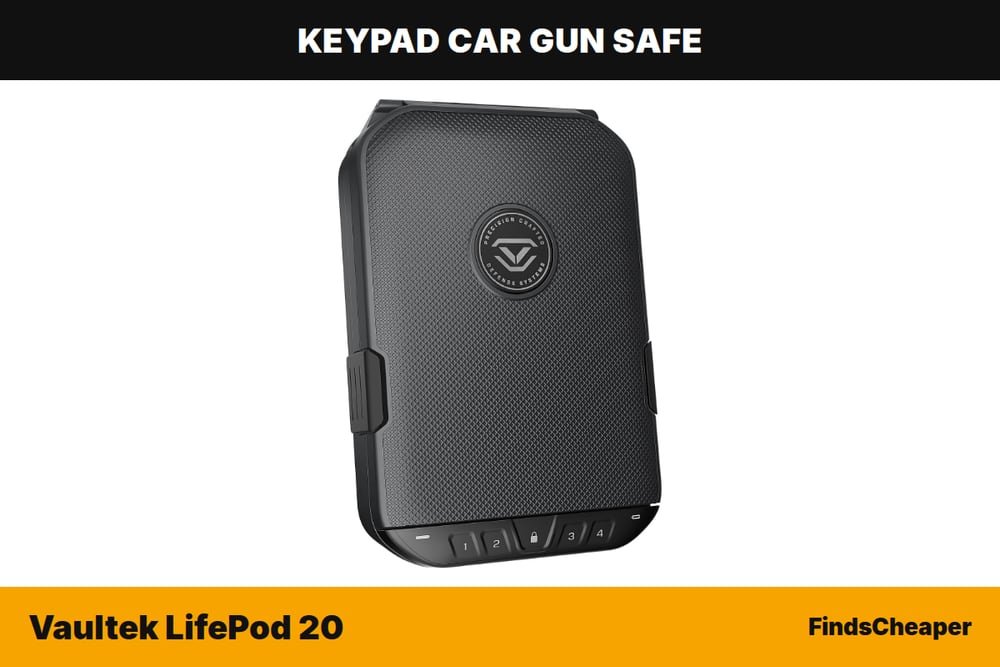
The LifePod 20 is the size to look at if your pistol is on the long side or you want to store everyday-carry items with it. The listing says it holds a full-size handgun up to 9.25 inches long and has a removable tray, so you can stack a compact pistol with gear or pull the tray for a larger handgun. It is a polymer case rather than steel, with a keypad, backup keys, a 9V battery and a hidden micro-USB port for a dead battery, plus a steel cable. Vaultek describes it as weather resistant and airtight, which matters if it will ride in a truck or boat. Our full LifePod 20 review goes deeper, and the Amazon listing has current pricing.
A biometric version, the LifePod 20 Biometric, shares the same stated capacity and adds a fingerprint scanner; see the LifePod 20 Biometric review. Size is identical, so choose between them on lock preference and budget. If you are weighing fingerprint locks generally, note that several biometric brands, including Awesafe, Bulldog biometric models, Machir and MouTec, were recalled because the reader could let unauthorized users, including children, open them; our biometric gun safe recall guide explains what to check.
Hornady Lockbox
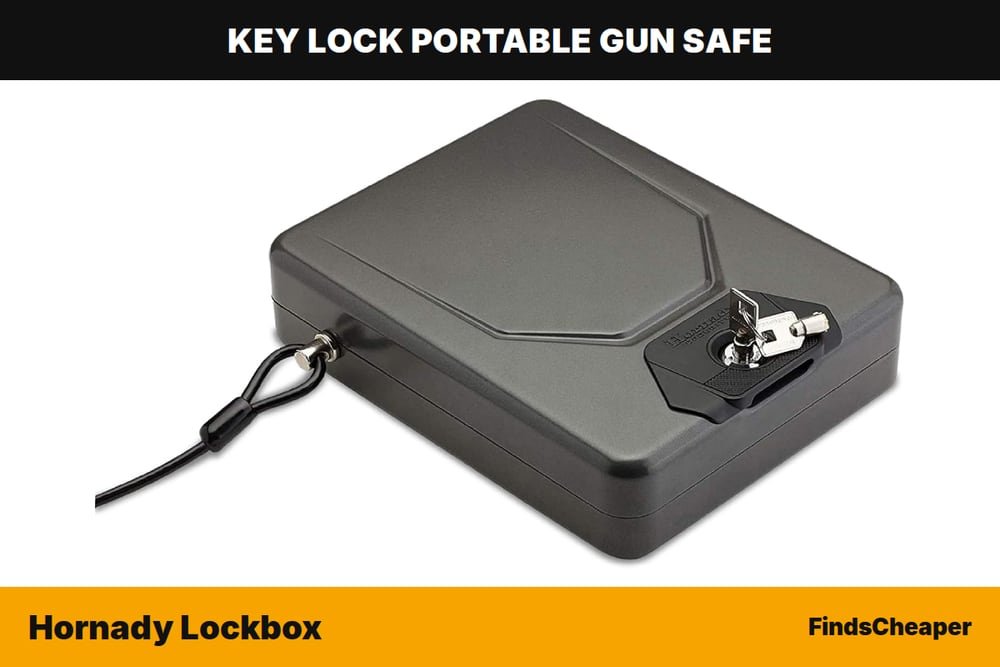
The Hornady Lockbox (the X Large Alpha Elite, item 98153 per the listing) is the most compact of the group at 10.25 x 8 x 2.75 inches outside, and it is listed for 1911 size pistols and 3-inch revolvers. It uses a barrel key, a 16-gauge steel housing, a dual crossbar latch and a padded foam interior, and comes with a steel cable. It needs no batteries, which makes it a simple travel box. The listing says it meets California DOJ standards and TSA airline firearm guidelines. The listing does not give interior dimensions, so compare your pistol’s length against the exterior with a margin for wall thickness. Our Hornady Lockbox review covers fit in more detail.
For more choices in this tier, see the best handgun safes and quick-access gun safe picks.
How to measure for fit
Whatever tier you are shopping, the same measuring steps apply.
- Measure the longest item. For handguns, measure overall length with any light or optic attached. For long guns, measure overall length and add a couple of inches of clearance so barrels are not pressed against the ceiling.
- Measure the widest item. Scopes and bolt handles set the width for long guns; grip and slide height set it for pistols in shallow boxes.
- Compare with interior dimensions. Use the interior figure from the listing or manual. If only exterior dimensions are listed, assume the usable space is meaningfully smaller.
- Check door swing and opening size. A full-size safe door needs clear space to open fully, and a small box lid needs headroom inside a drawer or under a seat.
- Measure the room. Height of the ceiling, width of doorways and stairs, and the path from the delivery truck to the final spot all matter for large safes.
Match the size to where it will live
The space you have often decides the size more than the collection does.
- Bedroom or nightstand: a quick-access handgun box sized to the drawer or shelf. Measure the drawer’s inside depth and height, not the furniture’s outside.
- Closet: a tall cabinet or mid-size safe. Check that the door clears the closet frame and shelving.
- Garage or basement: room for a full-size safe, but consider humidity and use a dehumidifier or desiccant in any safe that stays closed for long periods.
- Vehicle: a slim lockbox with a cable. Measure under the seat or in the console before buying.
- Upper floors: heavy safes put a lot of weight on a small footprint. Confirm the floor and the delivery path can handle it.
Any safe, large or small, is more secure when it is anchored. Small boxes rely on a cable or mounting screws; larger safes should be bolted to the floor. Our guide on how to bolt down a gun safe covers placement and anchoring basics.
Size versus fire protection and budget
Bigger safes cost more, and fire-rated safes of any size cost more still. If fire protection is important, check each listing for a stated fire rating and the conditions behind it, because not every safe has one; none of the small boxes above lists a fire rating. Our fireproof gun safe guide explains what to look for. On budget, it is usually better to buy the right size from a modest tier than the wrong size from a premium one. Our picks under $500 and under $1,000 are a good place to see what each price level gets you.
Quick sizing checklist
- One handgun, home or travel: portable lockbox or quick-access box, interior longer than the pistol.
- Two to four handguns plus documents: small safe with a shelf.
- A few long guns: tall cabinet or compact long-gun safe, taller than the longest barrel.
- Growing collection or scoped rifles: full-size safe, sized to at least a third more than you own today.
- Any size: confirm interior dimensions, plan the anchor point, and check the current price before you buy.
Storage and child-access laws vary by state, so check yours before deciding where and how to store firearms.
Watch: OpticsPlanet walks through how to think about safe size and capacity in this short guide.
For a broader comparison across every size and lock type, start with our best gun safe guide, or browse every model we cover in our gun safe reviews A to Z.
What Size Gun Safe Do I Need FAQ
What size gun safe do I need for one handgun?
For a single handgun, a portable lockbox or quick-access safe is usually enough. Measure the pistol’s overall length with any light or optic attached, then pick a box whose interior, not exterior, is longer than that with a little clearance. Listings such as the Hornady RAPiD Safe give interior dimensions and the pistol sizes they fit, so compare those numbers before you buy.
How big of a gun safe do I need for rifles?
The interior height must exceed your longest rifle or shotgun with a couple of inches of clearance, and the width must handle scopes and bolt handles. Expect realistic capacity to be lower than the advertised gun count, because ratings usually assume tightly packed guns without optics. Plan for at least a third more space than your current collection needs.
Are gun safe capacity ratings accurate?
They are best-case numbers. Manufacturers generally count every slot filled with unscoped long guns, sometimes including door panels. A collection with scoped rifles, slings or shelving needs fits far fewer. Use the gun count only to compare models within one brand, and rely on interior dimensions, rack layout and adjustable shelving to judge what will really fit.
Is a 24-gun or 26-gun capacity safe big enough?
It depends on what you own. A safe rated in that range can be roomy for a modest mix of handguns and a few long guns, but scoped rifles take much more room than the rating assumes. Check the interior dimensions, whether the rack is removable and how much shelf space remains, and compare the listing details rather than the headline number.
What gun safe sizes are there?
Gun safe sizes run from portable lockboxes and car safes for one handgun, to quick-access nightstand safes, to small and mid-size safes or cabinets for several handguns or a few long guns, up to full-size long-gun safes with racks and shelving. Each brand sizes its models differently, so treat these as tiers and confirm the interior measurements on the listing.
Should I buy a bigger gun safe than I need?
In most cases, yes, within the limits of your space and floor. Collections, documents and valuables tend to grow, and replacing or moving a heavy safe later costs far more than buying one size up now. A small handgun box is the exception: if it only ever holds one pistol for travel or bedside use, the right fit matters more than extra room.
Concealed Handgun Carry is reader-supported: as an Amazon Associate we earn from qualifying purchases, at no extra cost to you. We research listings, manuals and owner feedback; we do not accept payment for placement. Prices, coupons and availability change, so check Amazon for the current details. Store firearms safely and follow your state’s storage laws.